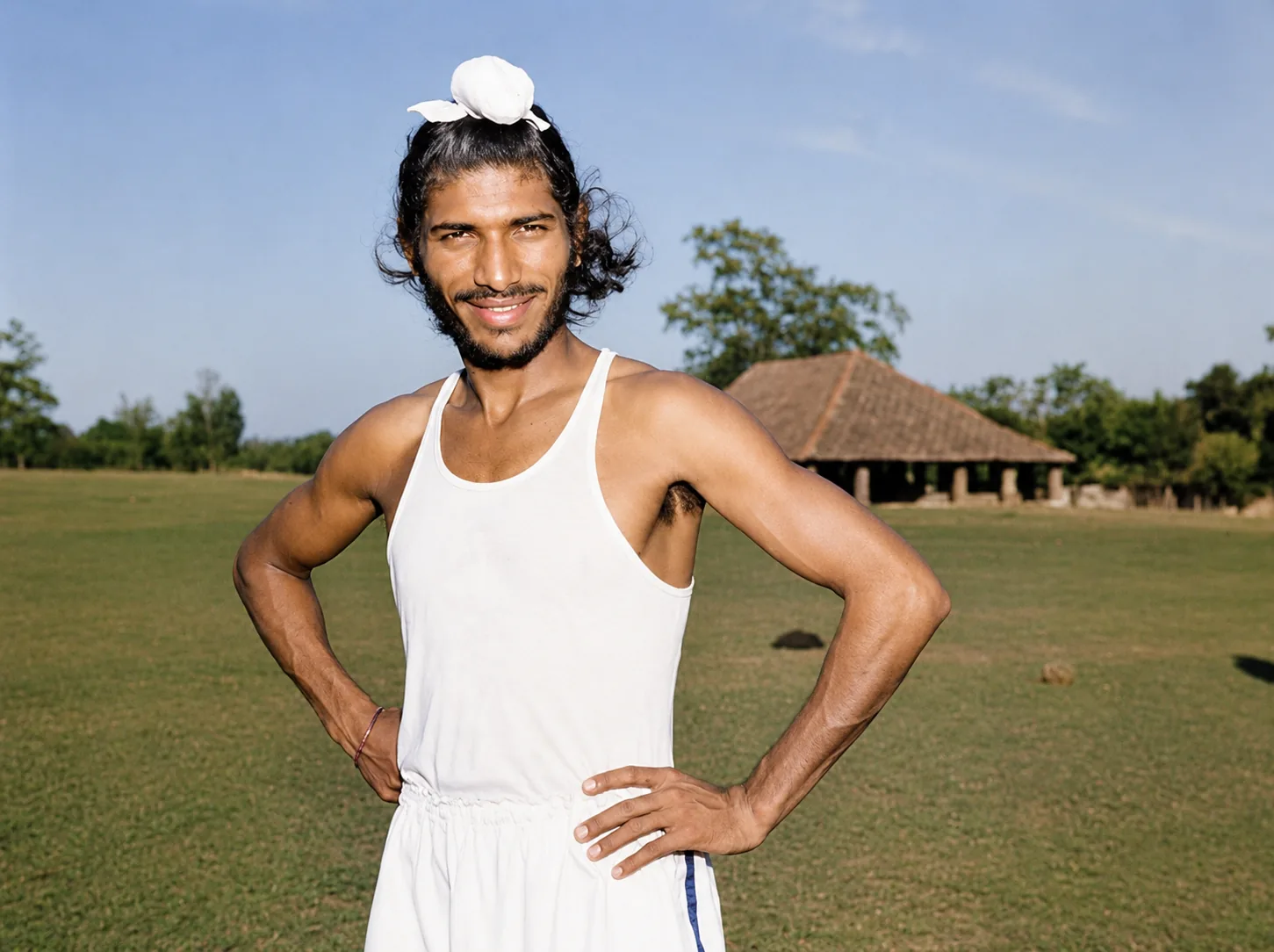
Athletics is unusual among human activities in that it produces a number at the end. Milkha Singh's number, for most of his life, was 45.73 seconds and a fourth place, run in Rome in 1960. He won a great deal else, and by any reasonable measure he was the finest sprinter Asia produced in the twentieth century. But he spent sixty years being asked about the one race in which he came fourth, and he answered honestly every time, which is part of why India loved him.
Govindpura
He was born in the village of Govindpura, in the Muzaffargarh district of the western Punjab, in what is now Pakistan. His birth date is genuinely uncertain. Official records at various points gave 20 November 1929; other documents suggest the mid-1930s; Milkha Singh himself said more than once that nobody in the village had written it down and he did not know.
What happened in 1947 he knew exactly. In the violence of Partition, his parents and several of his siblings were killed. He escaped, a teenager, and made his way to Delhi, travelling in the refugee movement that carried millions across the new border in both directions. He described afterwards hiding among bodies on a train, and living rough in the refugee camps around Purana Qila, and taking whatever work there was. He was, briefly, in trouble with the law over travelling without a ticket. His sister sold jewellery to get him out.
He tried repeatedly to enlist in the Indian Army and was rejected several times before being accepted in 1951 into the Electrical Mechanical Engineering corps. It was the army that put him on a track, in a cross-country run held for new recruits, where he finished sixth out of hundreds and was given a place in the athletics programme.
Learning to Run
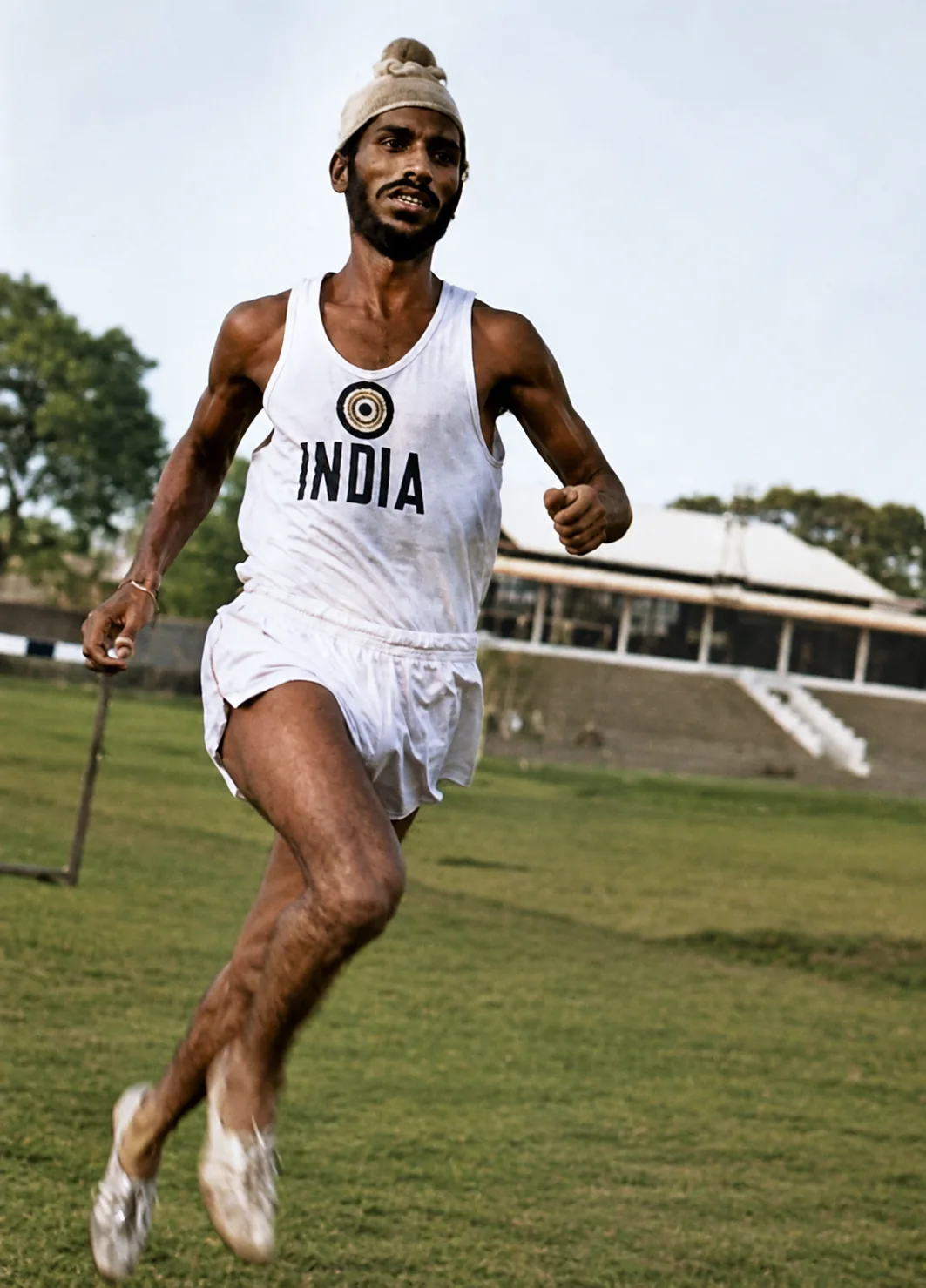
He trained with a ferocity that became part of his legend and, by his own account, was close to self-harm. He described running until he vomited or passed out, running in the heat of the day, running with sand in his shoes, adding weight, repeating four hundreds until his legs failed. There was no sports science available to him and no obvious model for what he was attempting. India had never produced a world-class sprinter.
The 1956 Melbourne Olympics went badly; he was eliminated in the heats. But in Melbourne he met the American 400-metre champion Charles Jenkins, asked him about training, and came home with a plan. What followed was one of the most concentrated improvements in the sport's history.
1958
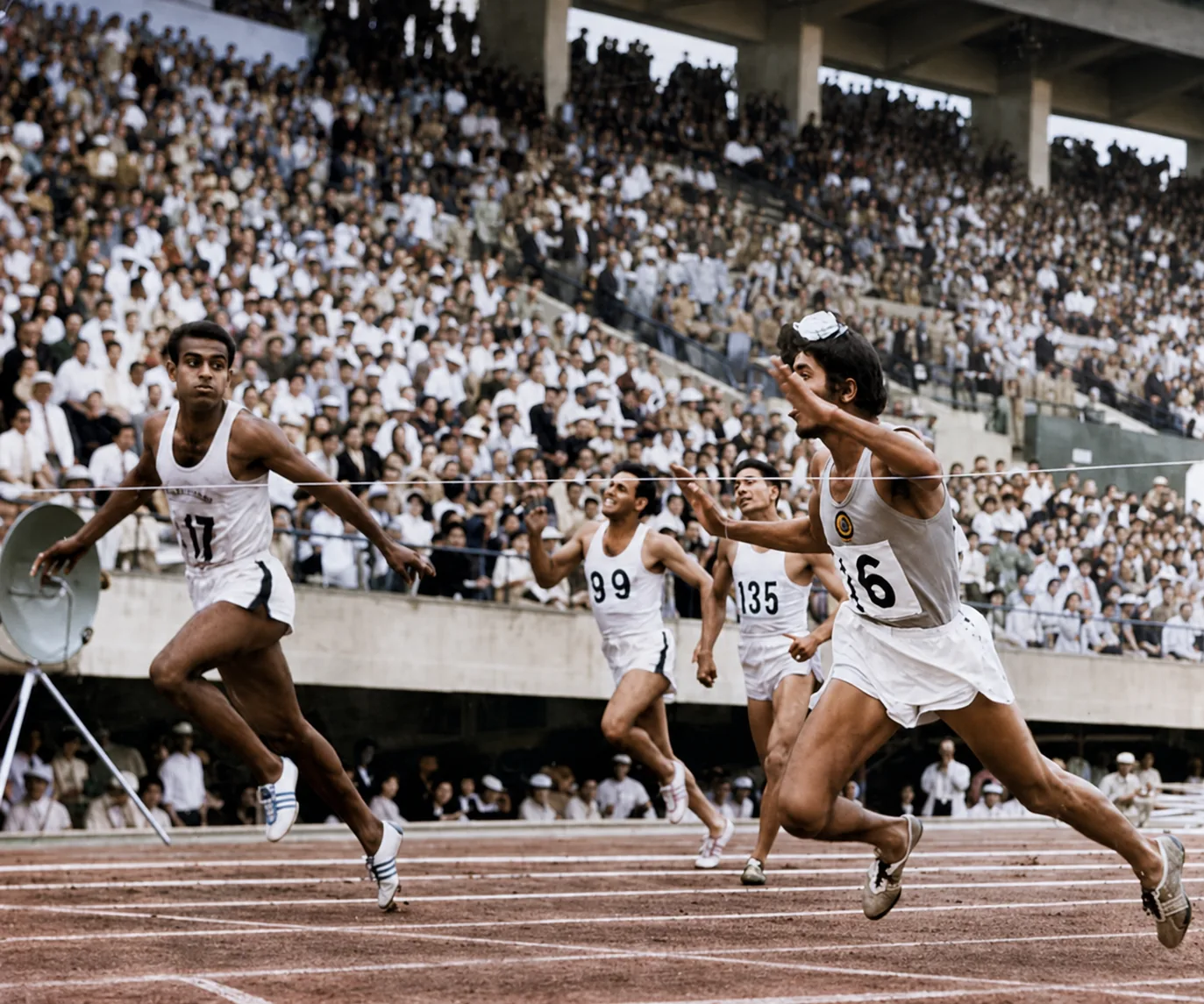
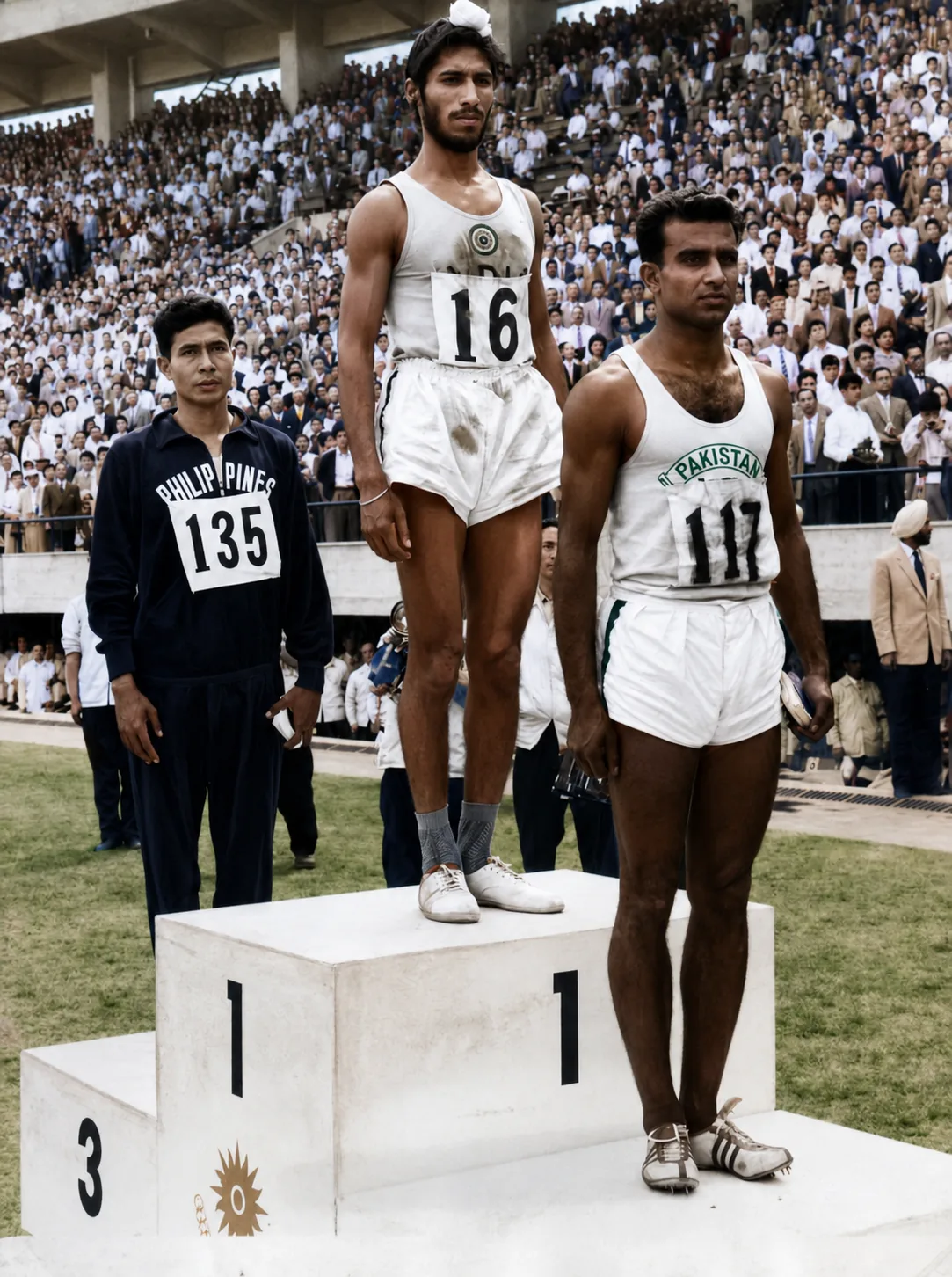
The breakthrough year was 1958. At the Asian Games in Tokyo he won gold in both the 200 metres and the 400 metres. Then at the Commonwealth Games in Cardiff he won the 440 yards, beating the South African favourite Malcolm Spence in a finish that was decided in the last stride. It was independent India's first Commonwealth Games athletics gold and remained the country's only one on the track for decades.
The nickname arrived around this period. The common account is that it was given to him in Lahore, where he raced the Pakistani sprinter Abdul Khaliq and won, and that General Ayub Khan, presenting the medal, told him he had not run but flown, and called him the Flying Sikh. Details of the exchange vary between tellings, but the name stuck on both sides of the border, which in itself says something.
He was awarded the Padma Shri in 1959.
Rome
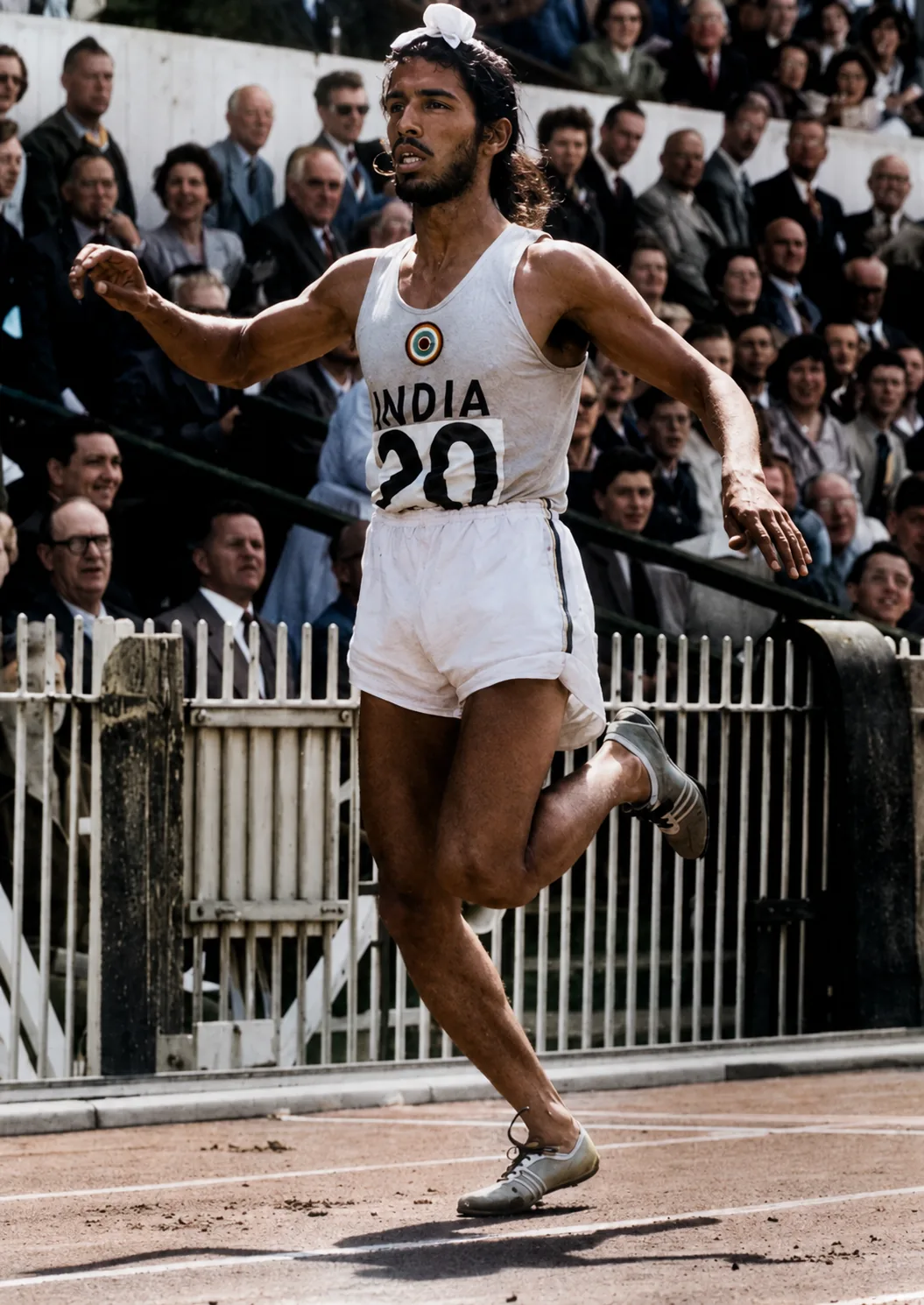
The 400-metre final at the 1960 Rome Olympics was the fastest field the event had ever assembled. Milkha Singh, running in it as a genuine contender, went out extremely hard and led at the halfway point.
Then, in the back straight, he did something he could never afterwards explain to his own satisfaction. Sensing he had gone too fast, he eased fractionally and glanced over his shoulder to check the field. It is the single most analysed moment in Indian sport. By the time he reacted, three men had gone past him. Otis Davis of the United States won in a world-record time, with Carl Kaufmann of Germany second and Malcolm Spence third. Milkha Singh finished fourth, in a time officially recorded as 45.73 seconds after later electronic conversion, having missed a medal by a fraction.
The time stood as the Indian national record for approximately thirty-eight years, until Paramjeet Singh broke it in 1998. For a losing run, that is an extraordinary shelf life.
He said, decades later, that he still saw the race at night. He also said, with characteristic bluntness, that the mistake was his own and that no one else was to blame for it.
Afterwards
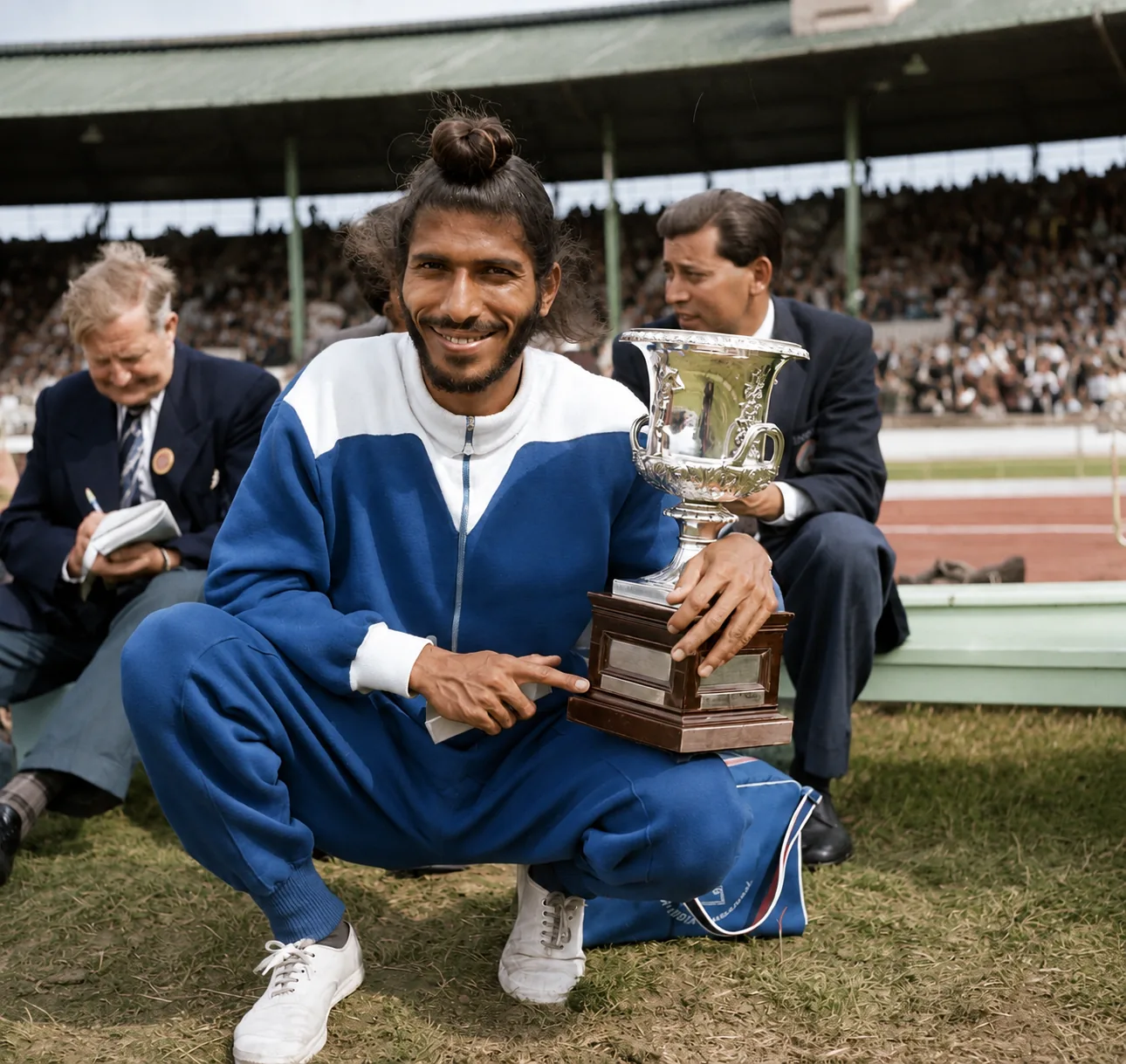
He competed at the 1962 Asian Games in Jakarta, taking gold in the 400 metres and in the relay, and at the 1964 Tokyo Olympics as part of the Indian relay squad, before retiring. He married Nirmal Kaur, an India volleyball captain, and worked for many years as Director of Sports in the Punjab government, promoting athletics in schools and colleges. Their son, Jeev Milkha Singh, became one of India's most successful professional golfers.
He remained a public figure of unusual moral standing, partly because he never pretended the fourth place had not hurt, and partly because he spent decades saying, insistently and often irritably, that India ought to be producing Olympic medallists on the track and was not. He declined the Arjuna Award late in life on the grounds that it had come far too late to mean anything.
His memoir, written with his daughter Sonia Sanwalka, was published as The Race of My Life, and the 2013 film Bhaag Milkha Bhaag introduced the story to a generation who had never seen him run. He famously sold the film rights for a token sum.
Milkha Singh died on 18 June 2021 in Chandigarh, of complications from Covid-19, days after his wife died of the same illness.
The Fourth Place
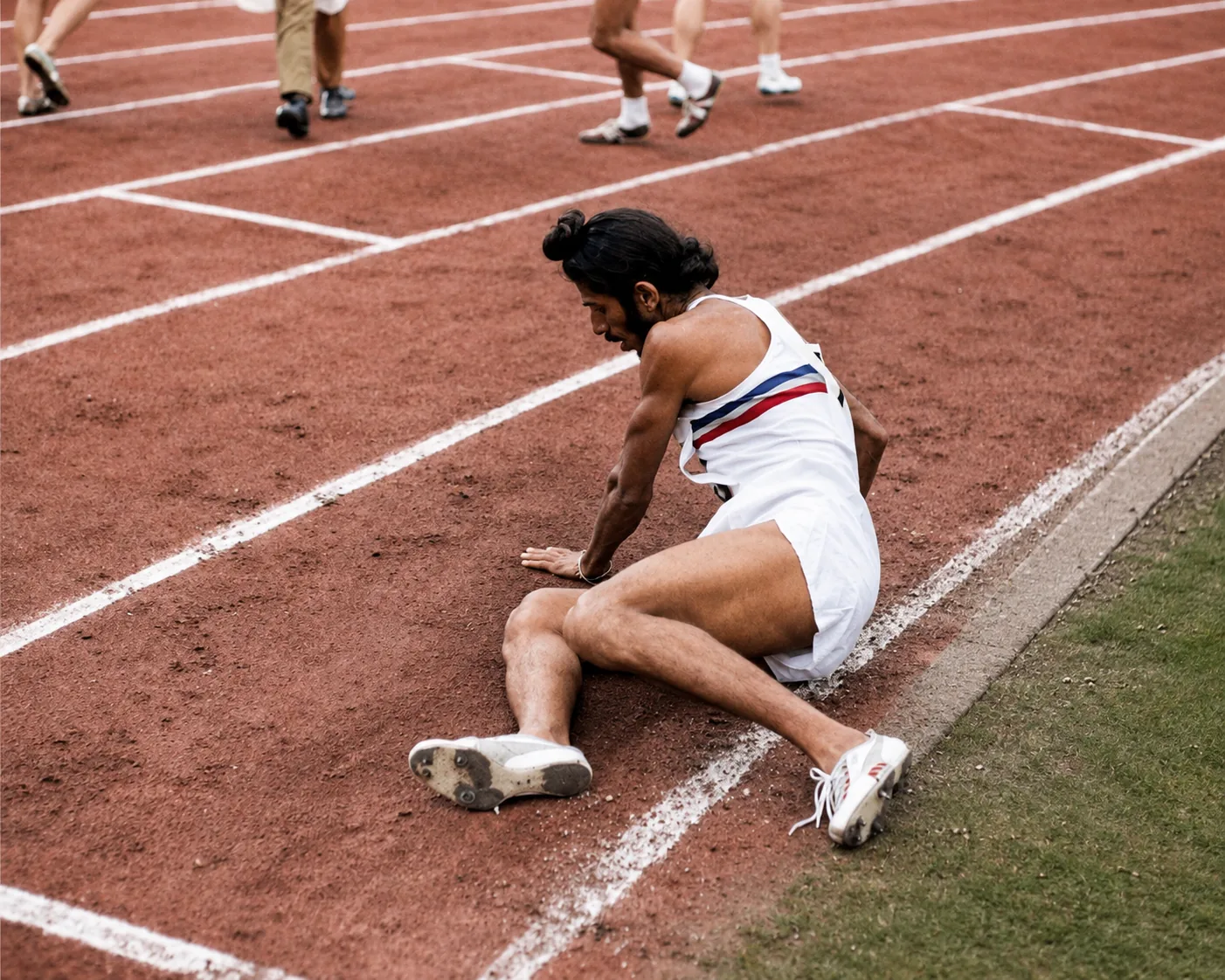
There is a reason a near-miss became a founding myth. India in 1960 was thirteen years old as a nation and had almost no international sporting record outside hockey. A refugee from a village that no longer belonged to his country ran the fastest quarter-mile of any Asian alive and came within a stride of the podium. That was not a failure. It was proof of possibility, delivered by a man who had lost everything before he was old enough to shave, and who then trained himself, without help, into the best in the world at something.