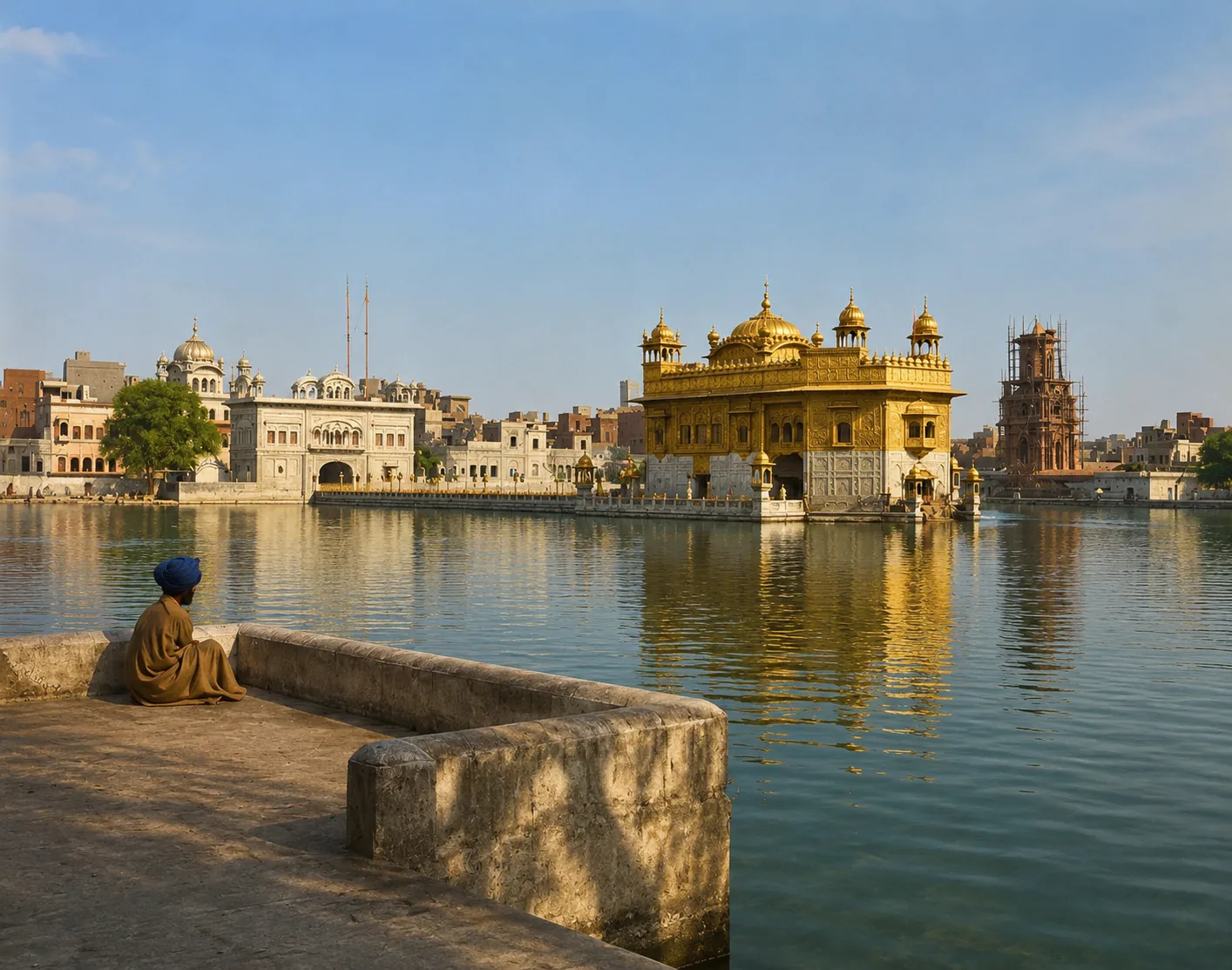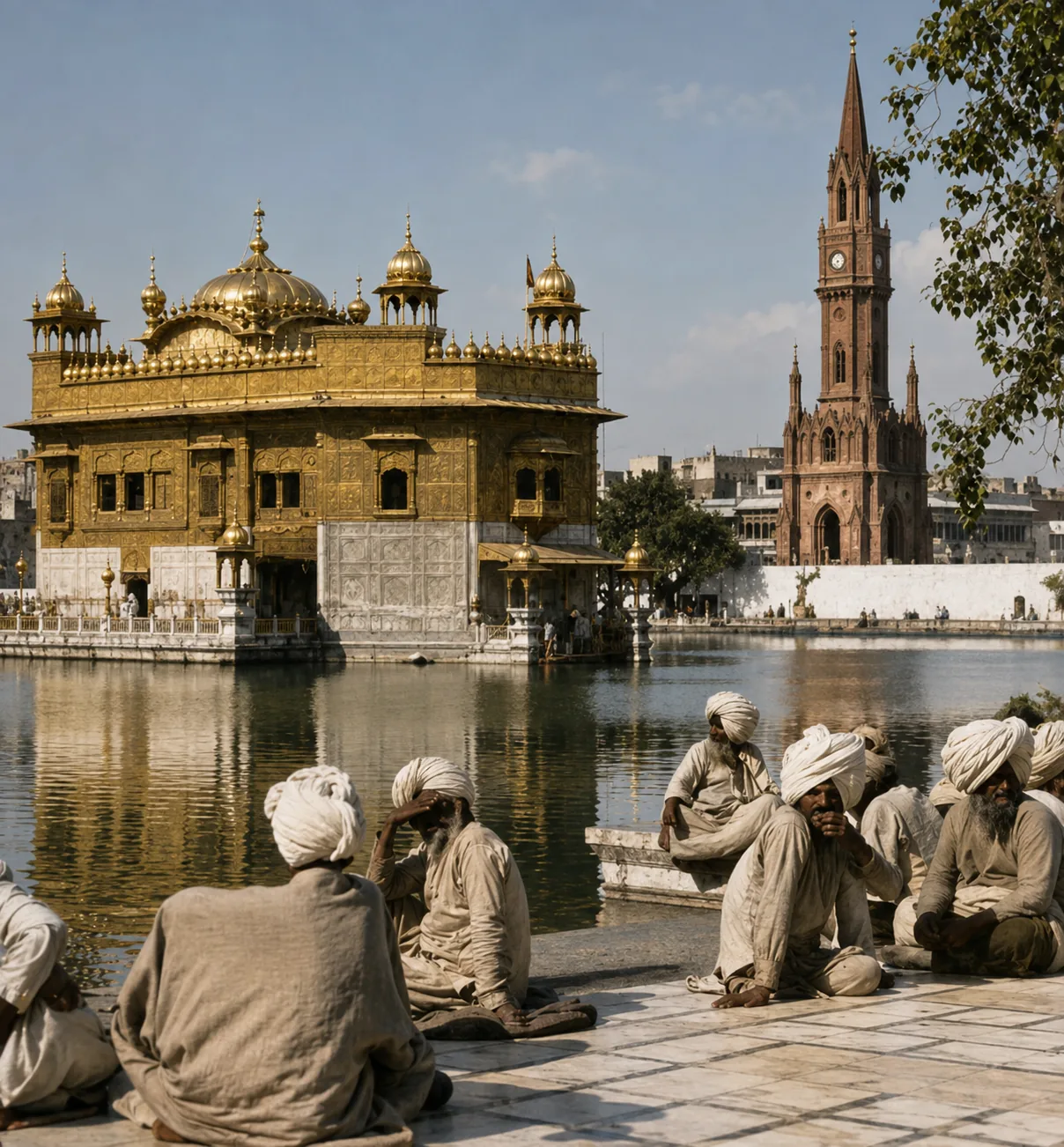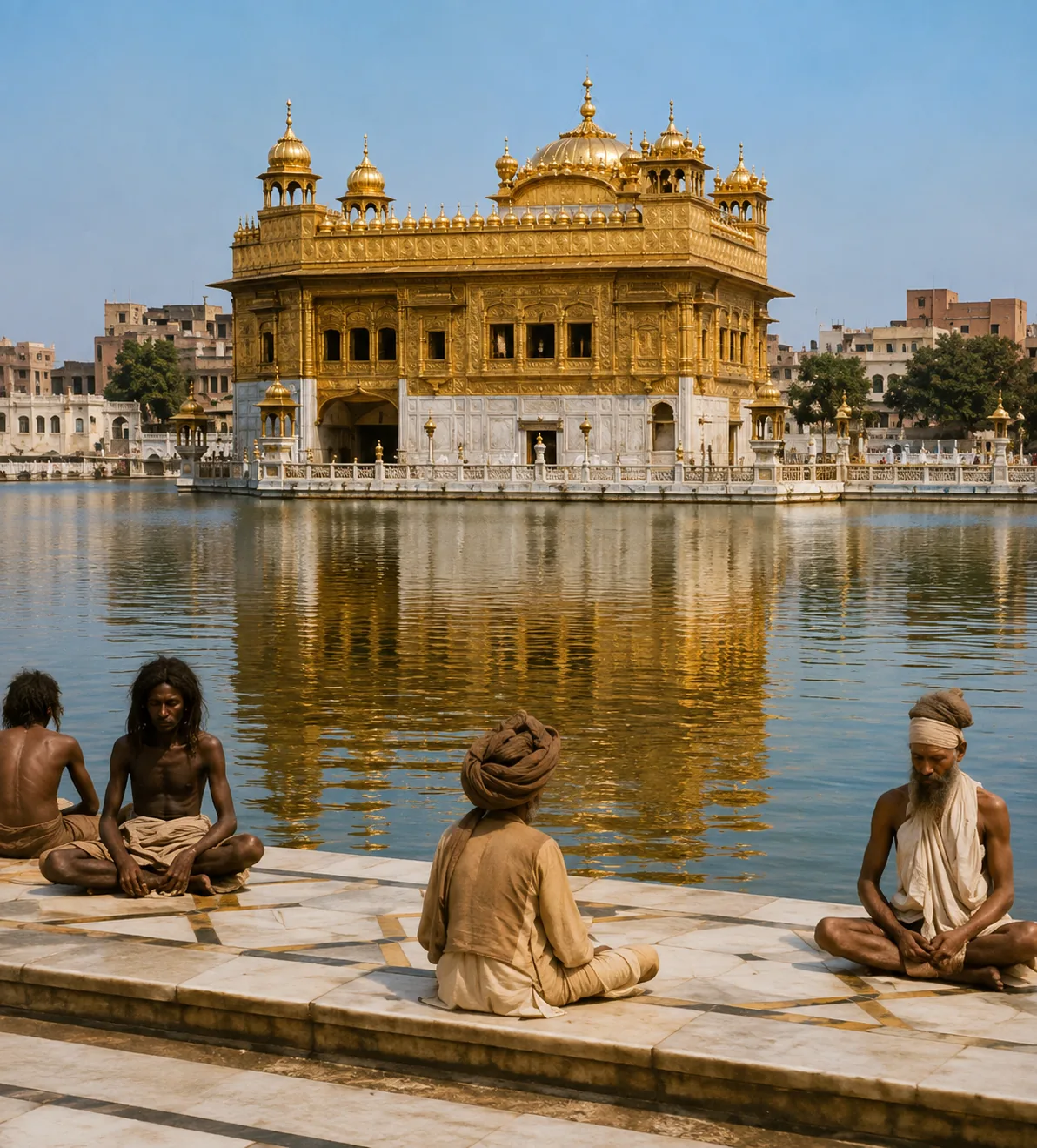
Amritsar is the spiritual centre of Sikhism, a city in the plains of Punjab in northern India, set not far from the border with Pakistan. Its name carries its meaning openly: it comes from the Amrit Sarovar, the pool of nectar that surrounds the Harmandir Sahib, the shrine the world knows as the Golden Temple. For Sikhs everywhere, Amritsar is a place of pilgrimage and belonging, while for visitors of every faith it is a city of light on the water, of shared meals, and of long histories woven into its narrow lanes.
A City Born from a Pool
The story of Amritsar begins with water rather than walls. According to tradition, the site was chosen for its sacred tank, and the city grew around the excavation and lining of this pool. The settlement that formed here was first known as Ramdaspur, after its founder, and only later took the name of the Amrit Sarovar that gave it its purpose. From the start, the city was conceived less as a fortress or a market town than as a gathering place around a holy centre, a design that still shapes how Amritsar feels today.
The Founding by Guru Ram Das
Amritsar was founded in 1577 by Guru Ram Das, the fourth of the Sikh Gurus. He oversaw the digging of the sacred pool and the establishment of the surrounding settlement, drawing followers and tradesmen to the new town. The founding of the city was one part of a longer project carried forward across the lives of the Ten Gurus, each of whom shaped the young Sikh community in his own way. Under Guru Ram Das, the bare outline of a spiritual capital was set down, ready to be built upon by those who came after him.
The Harmandir Sahib
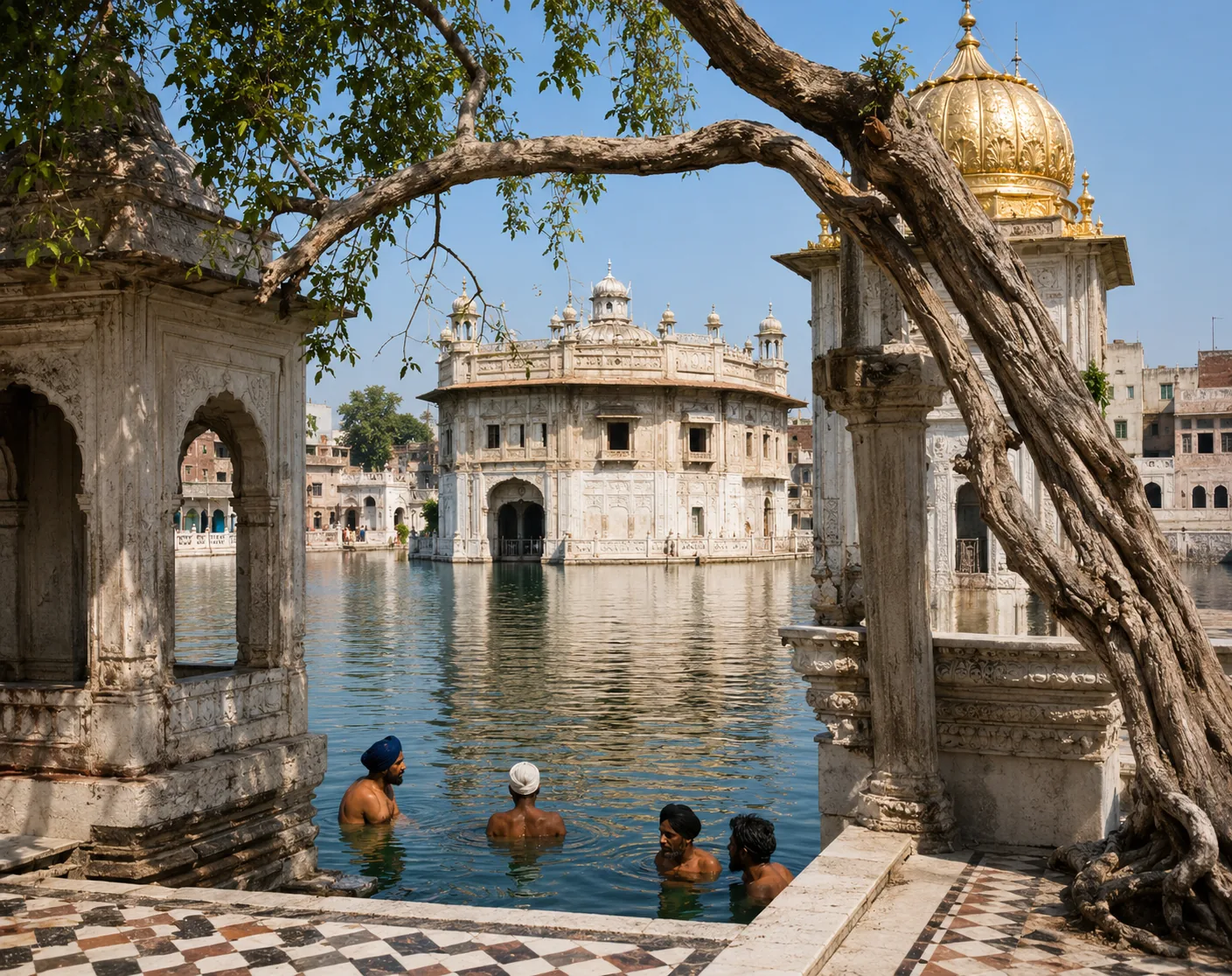
At the heart of the city stands the Golden Temple, known in Punjabi as the Harmandir Sahib, the holiest shrine of Sikhism. It was Guru Arjan, the fifth Guru, who completed the temple and gave it the form remembered today. He placed it low, so that worshippers descend to reach it, and opened it on all four sides, a sign that it welcomes people from every direction and every walk of life. The golden facade that gives the temple its popular name was added in later centuries, but the spirit of openness was there from the beginning.
The temple was built lower than the surrounding land, so that those who come to it must step down in humility before they rise in prayer.
The Adi Granth and the Akal Takht
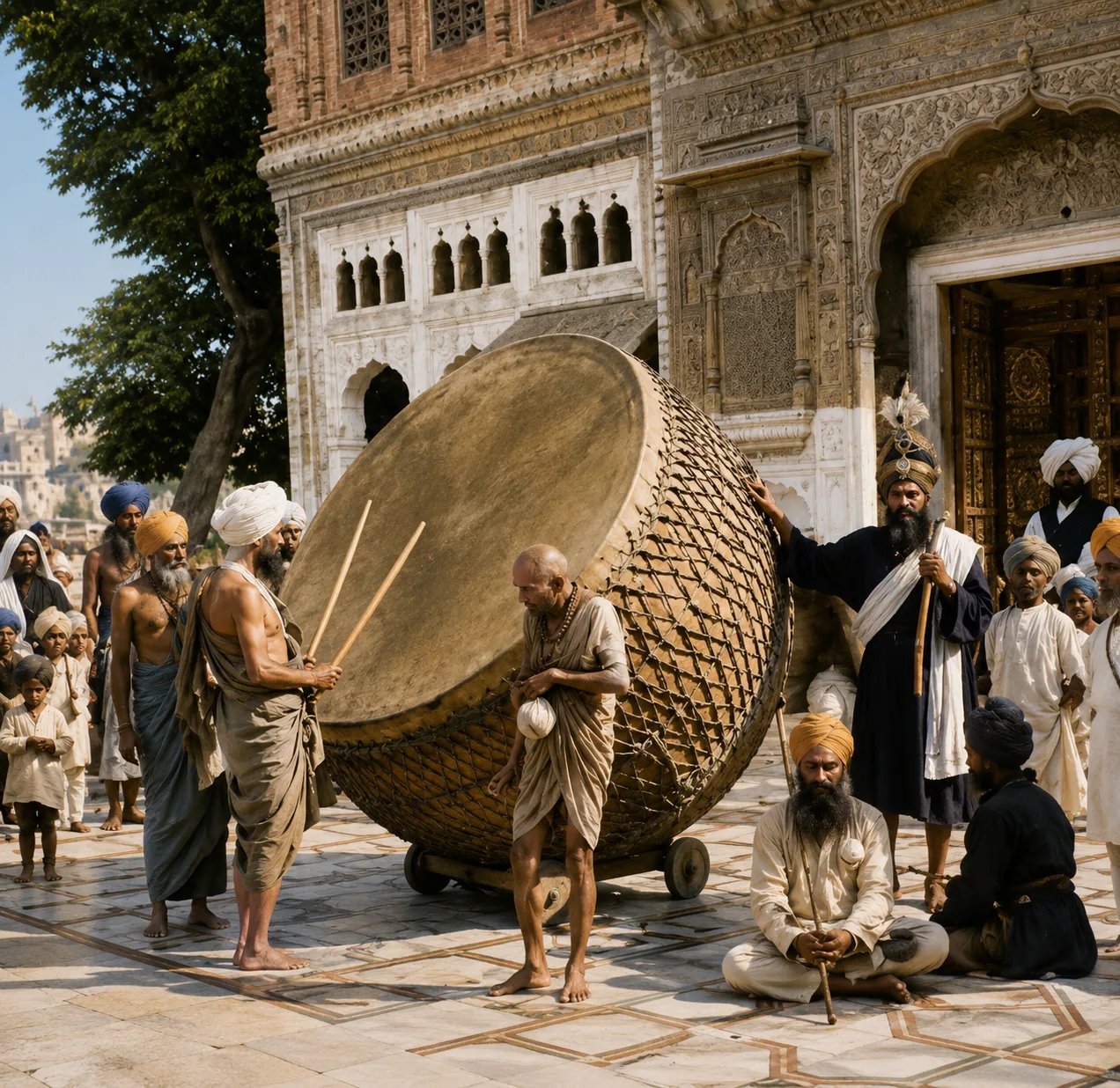
Guru Arjan did more than complete the building. He compiled the Adi Granth, the first canonical scripture of the Sikhs, and installed it within the Harmandir Sahib, making the shrine the living centre of Sikh worship and learning. Facing the temple across the complex stands the Akal Takht, the highest seat of temporal authority in Sikhism. Together the two structures express a balance that runs through Sikh thought: the spiritual and the worldly, devotion and responsibility, held side by side within a single sacred precinct.
Jallianwala Bagh
A short walk from the Golden Temple lies Jallianwala Bagh, a walled public garden whose name is bound to one of the most sorrowful chapters of the city's history. In 1919, under British colonial rule, a peaceful gathering in the enclosed garden ended in a massacre when troops opened fire on the crowd. The event left a deep mark on the city and on the wider country, and the garden is preserved today as a place of remembrance. For many who come to Amritsar, a visit to the bagh follows naturally from time spent at the temple nearby.
A Centre of Trade and Craft
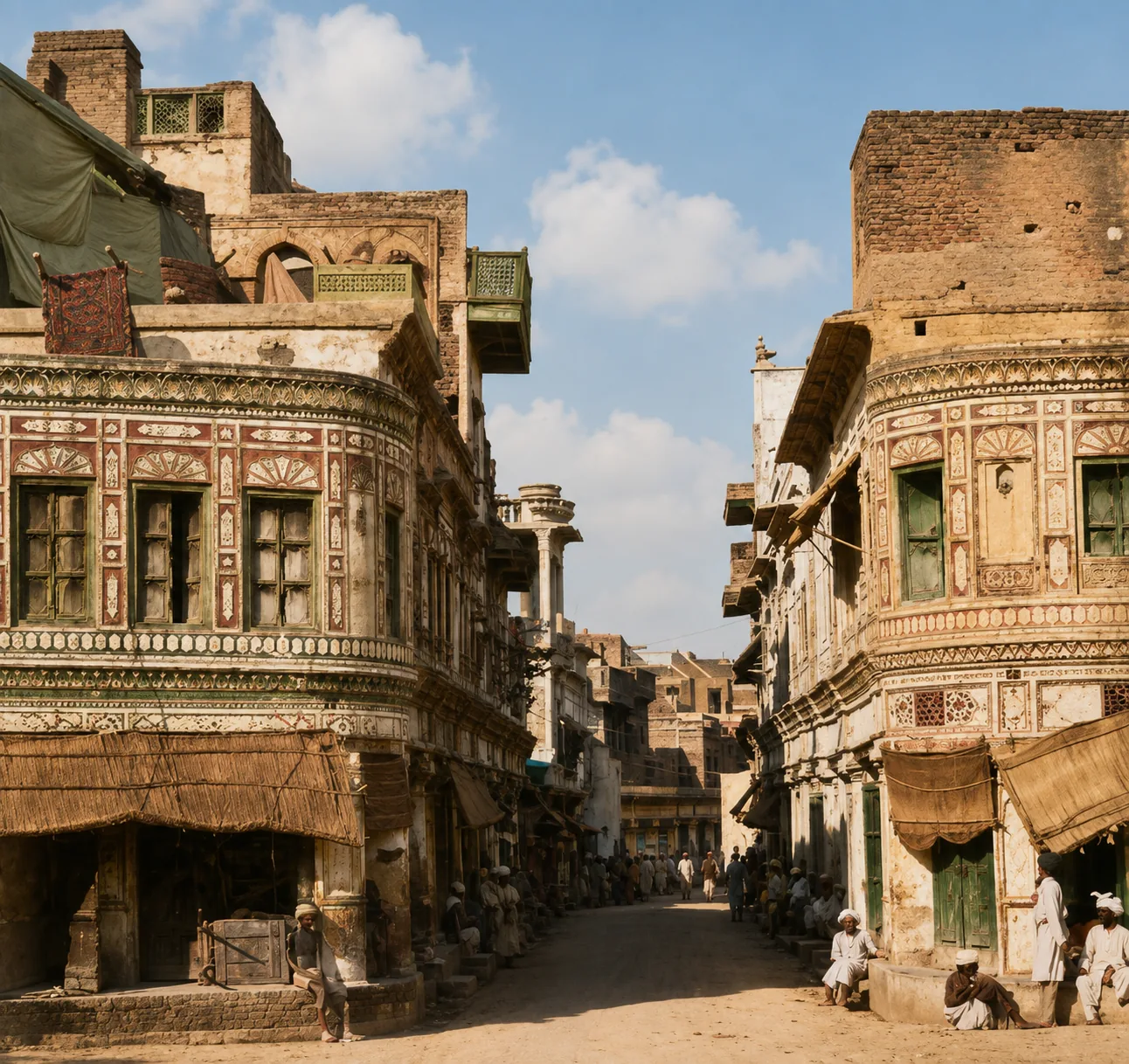
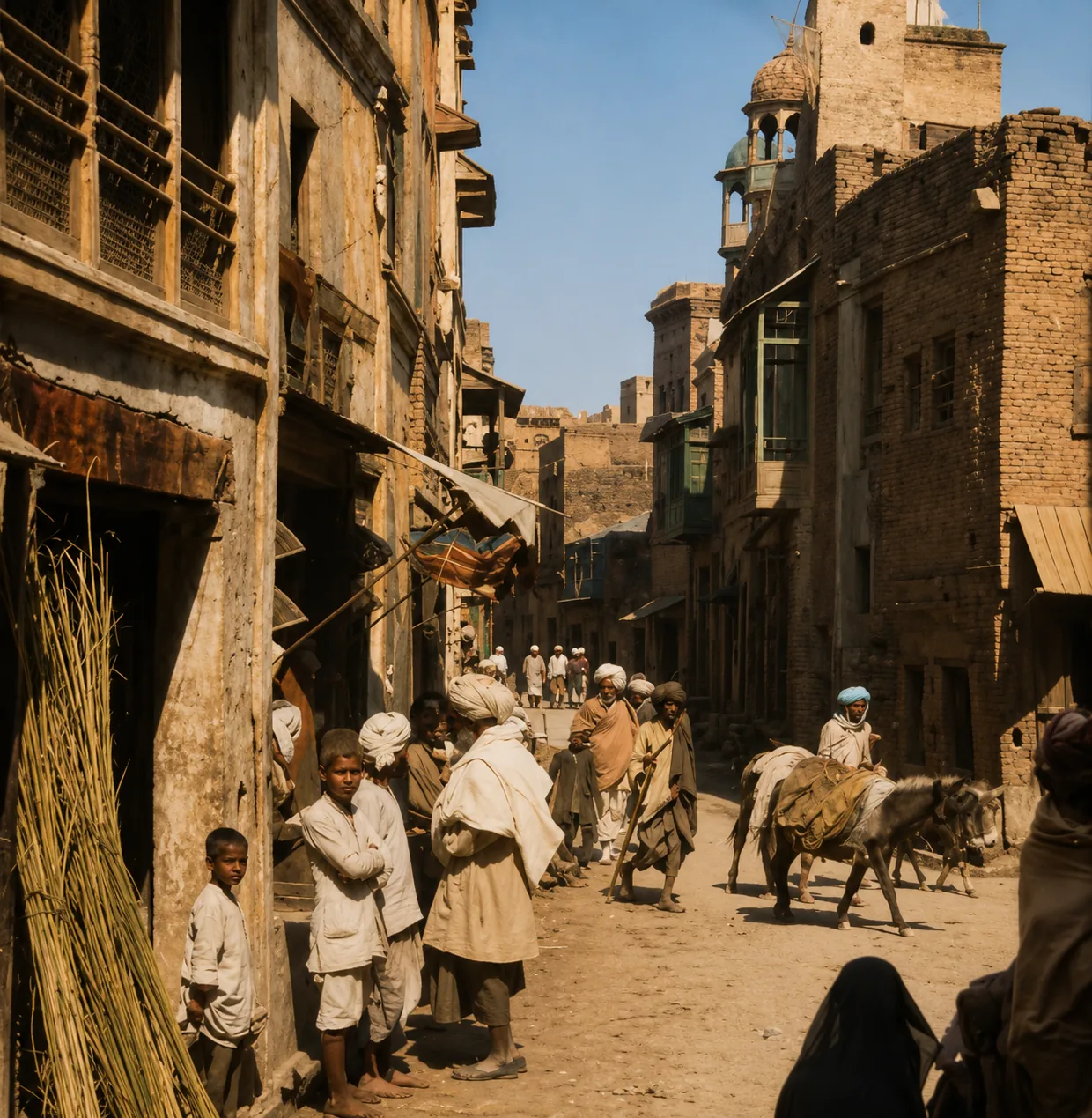
Amritsar has never been only a place of worship. Standing on old routes between the plains and the passes to the northwest, it grew into a thriving centre of commerce, drawing merchants, weavers, and artisans. The city became known for its textiles and crafts, and its markets have long carried the bustle of a working trade town alongside the quiet of its shrines. This double character, sacred and commercial at once, has given Amritsar a distinctive energy that sets it apart among the cities of Punjab.
The Taste of the City
No account of Amritsar is complete without its food, for the city holds a celebrated place in Punjabi cuisine. Its kitchens are known for hearty, generous cooking, from rich breads and stuffed flatbreads to slow-cooked lentils and dishes flavoured with the warmth of the region's spices. The tradition of the langar, the free communal kitchen served at the Golden Temple, reflects a wider spirit of hospitality that runs through the city. To eat in Amritsar is to share in something the city offers freely to all who arrive at its gates.
A City of Light on the Water
To stand at the edge of the Amrit Sarovar at dawn or dusk, watching the golden dome shimmer on the surface of the pool, is to understand why Amritsar holds such a place in the Sikh imagination. It is a city defined by its centre, by the sacred water and the shrine that rises from it, and by the unbroken stream of pilgrims who have come to its banks for centuries. Founded around a promise of openness and built up by generations of devotion, Amritsar remains, in every sense, the holy city of the Sikhs.