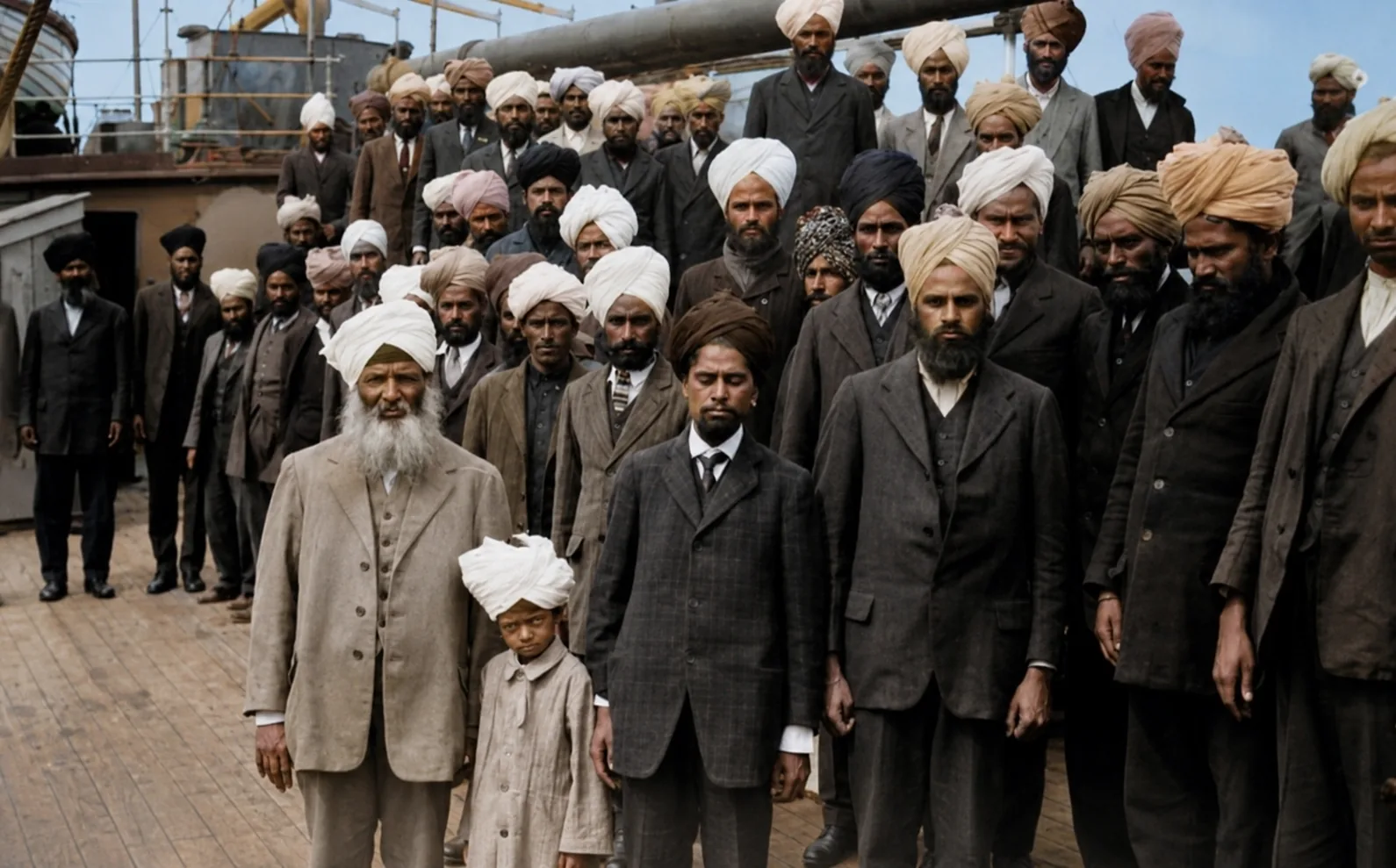
In the spring of 1914, a Japanese steamship carried 376 Punjabis halfway around the world to test a single question: were they truly subjects of the British Empire, free to settle anywhere within it, or only when it suited the Empire? The answer they received in Vancouver harbour, and the bloodshed that followed their forced return, made the Komagata Maru one of the most important episodes in the history of the Punjabi diaspora.
A law designed to exclude
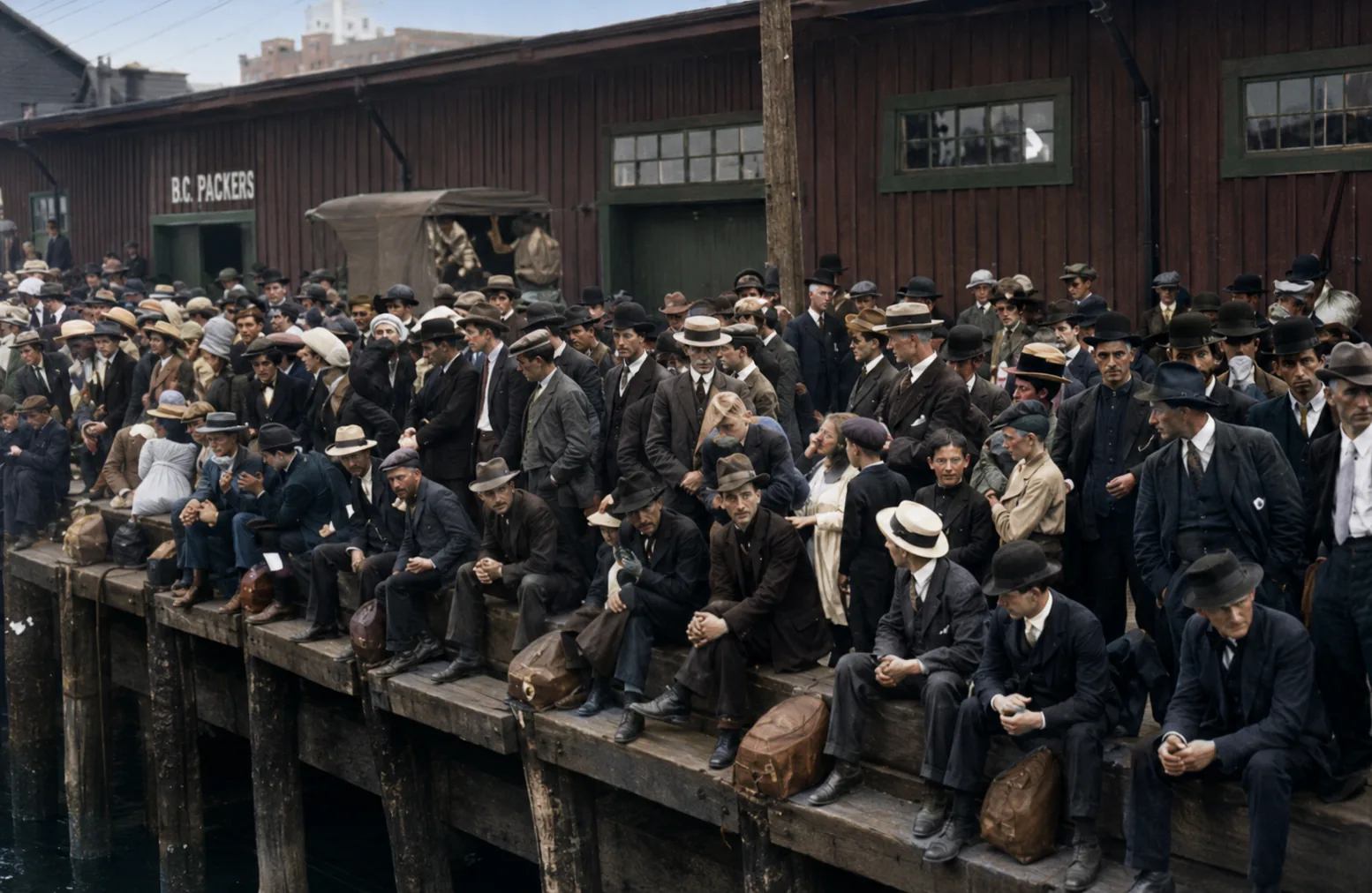
By the early 1900s, Punjabis, most of them Sikhs, were arriving on the west coast of North America to work in lumber mills and on farms. Many were former soldiers and policemen of the British Indian Army who had served the Empire loyally. Yet their growing presence alarmed authorities in British Columbia, and Canada moved to shut the door without naming the people it meant to keep out.
The instrument was the "continuous journey regulation", an order in council first passed on 8 January 1908. It barred any immigrant who did not arrive by a single, unbroken journey from their country of origin, on a ticket bought before departure. Since no shipping company sold a direct passage from India to Canada, the rule made lawful Indian immigration almost impossible while never mentioning India at all.
The voyage
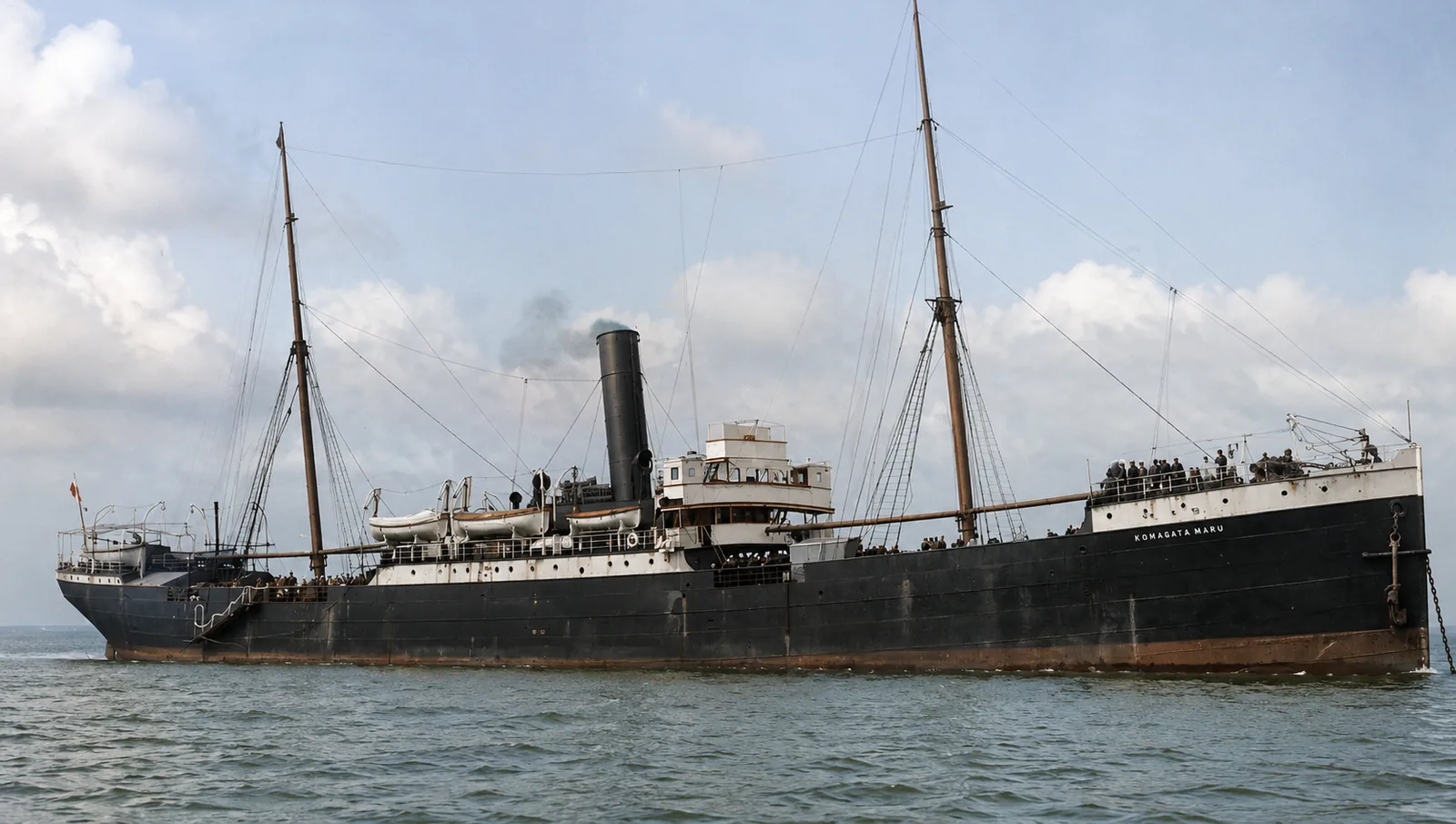
Gurdit Singh, a Sikh businessman based in the Far East, set out to break the rule head on. If he could charter a ship to sail directly from an Indian port to Canada, he reasoned, the continuous journey could be satisfied and the law exposed for what it was. He hired the Komagata Maru and began boarding passengers.
The ship left Hong Kong on 4 April 1914 with 165 aboard, then called at Shanghai, Moji and Yokohama, taking on more travellers along the way. When it finally set course across the Pacific from Yokohama on 3 May, it carried 376 passengers: 340 Sikhs, 24 Muslims and 12 Hindus, almost all of them from Punjab.
Two months in the harbour
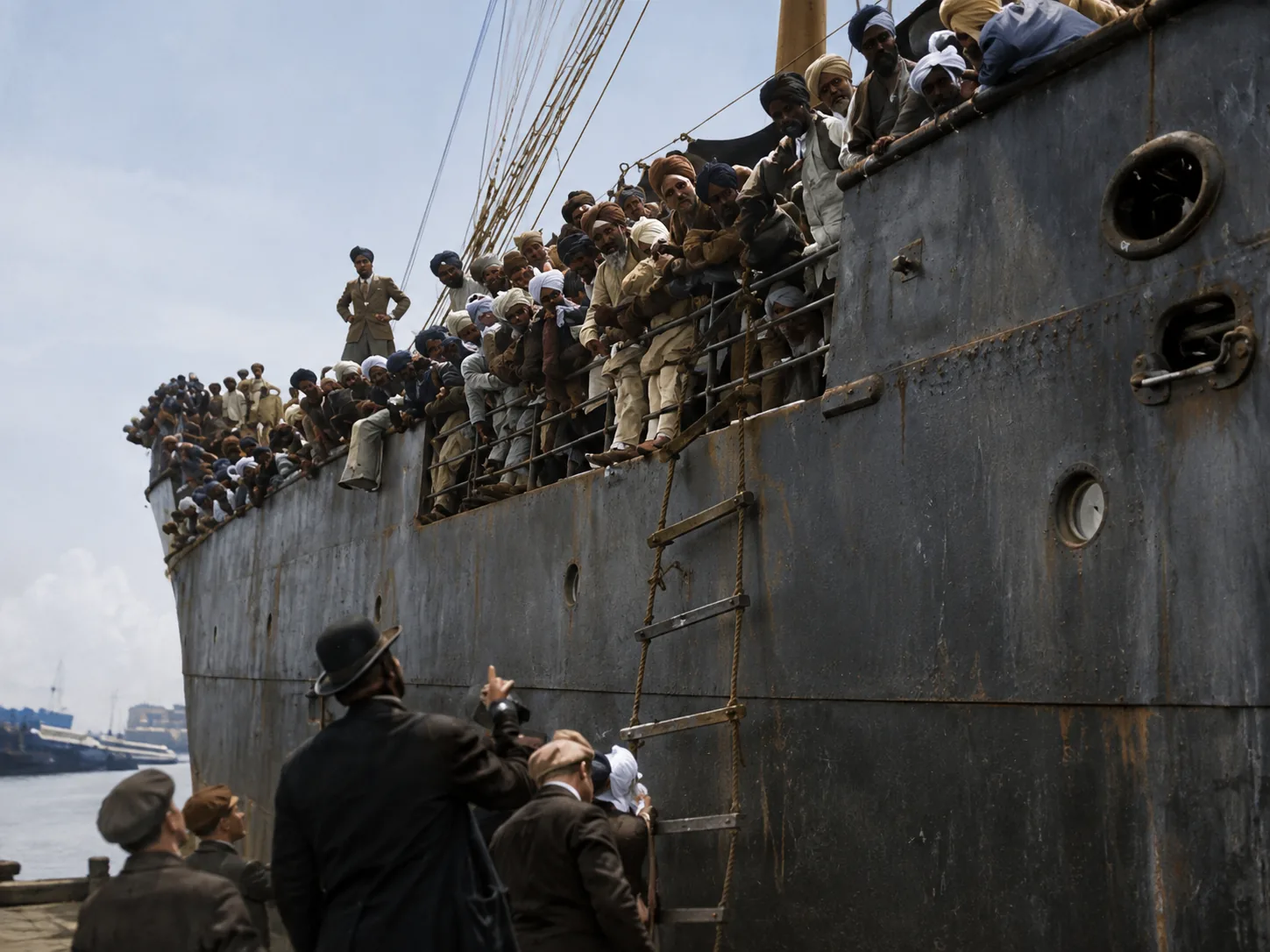
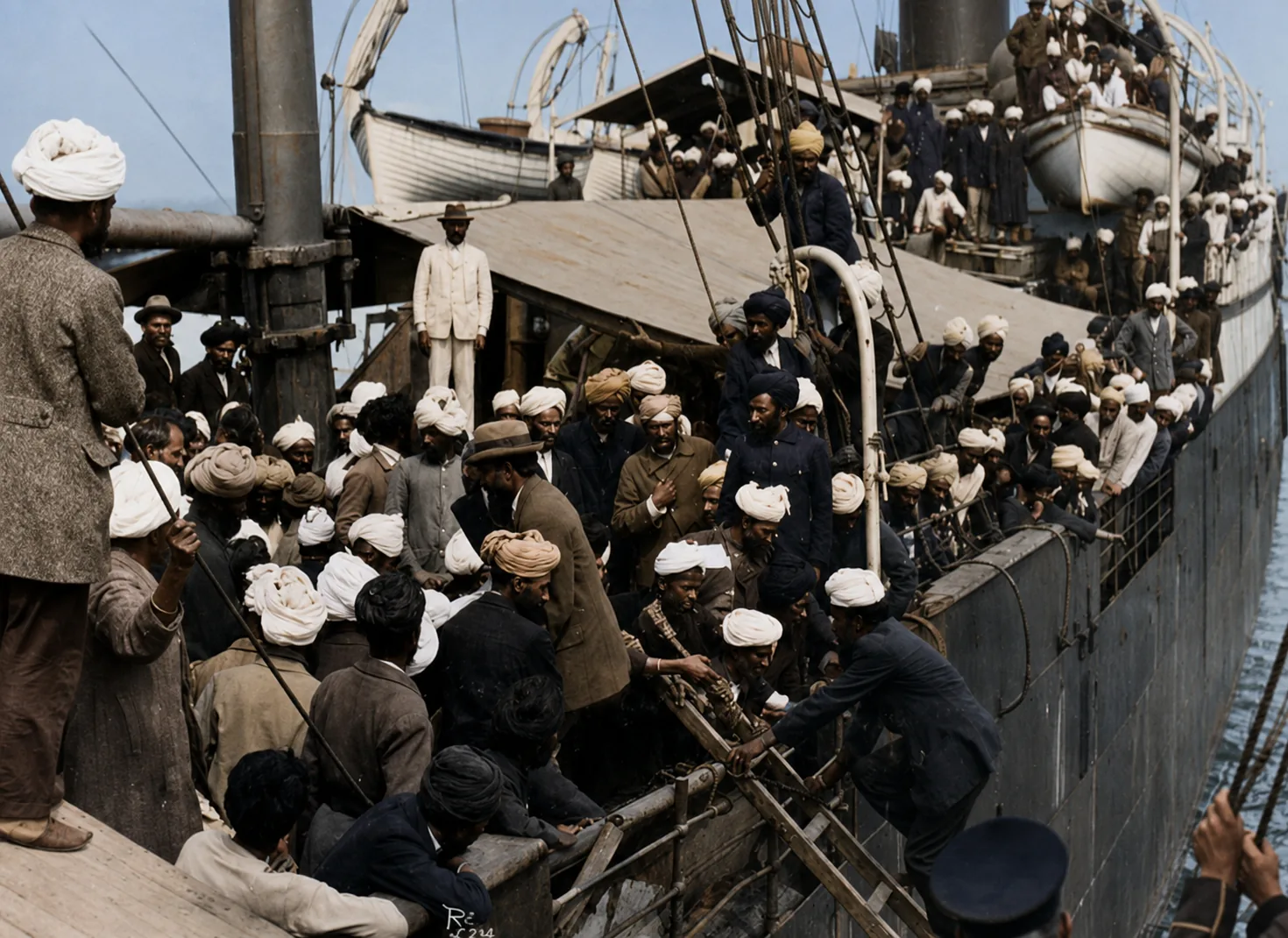
The Komagata Maru reached Burrard Inlet, off Vancouver, on 23 May 1914. It was not allowed to dock. Immigration officials, backed by Prime Minister Robert Borden and the local MP H. H. Stevens, kept the ship anchored offshore and refused to let the passengers land, hoping that hunger, thirst and mounting costs would force it to turn back.
For two months the passengers were held in worsening conditions within sight of the shore. A local "Shore Committee" of Punjabi residents rallied to their defence, raising around 20,000 dollars to take over the charter and fund a legal challenge. On 6 July the British Columbia Court of Appeal ruled unanimously against the passengers. When officials cut off food and water and armed police tried to board on 19 July, those on deck drove them back with coal and bricks. Only after the cruiser HMCS Rainbow was brought in, its guns trained on the ship, did the standoff end. Just 22 of the 376 were admitted to Canada. The rest were forced to leave, and the Komagata Maru sailed on 23 July 1914.
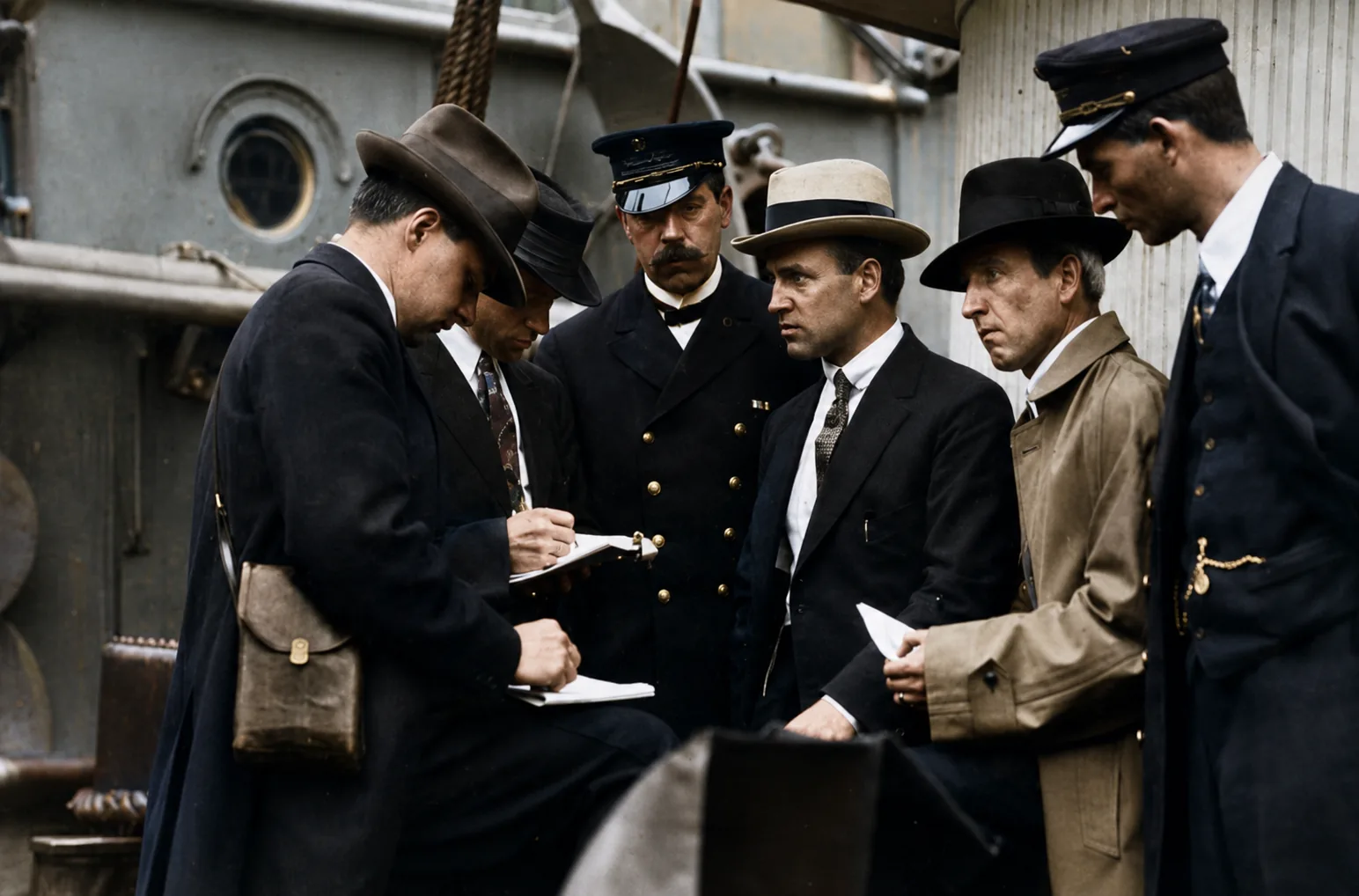
They had crossed an ocean as British subjects and were turned away as unwanted strangers.
Tragedy at Budge Budge
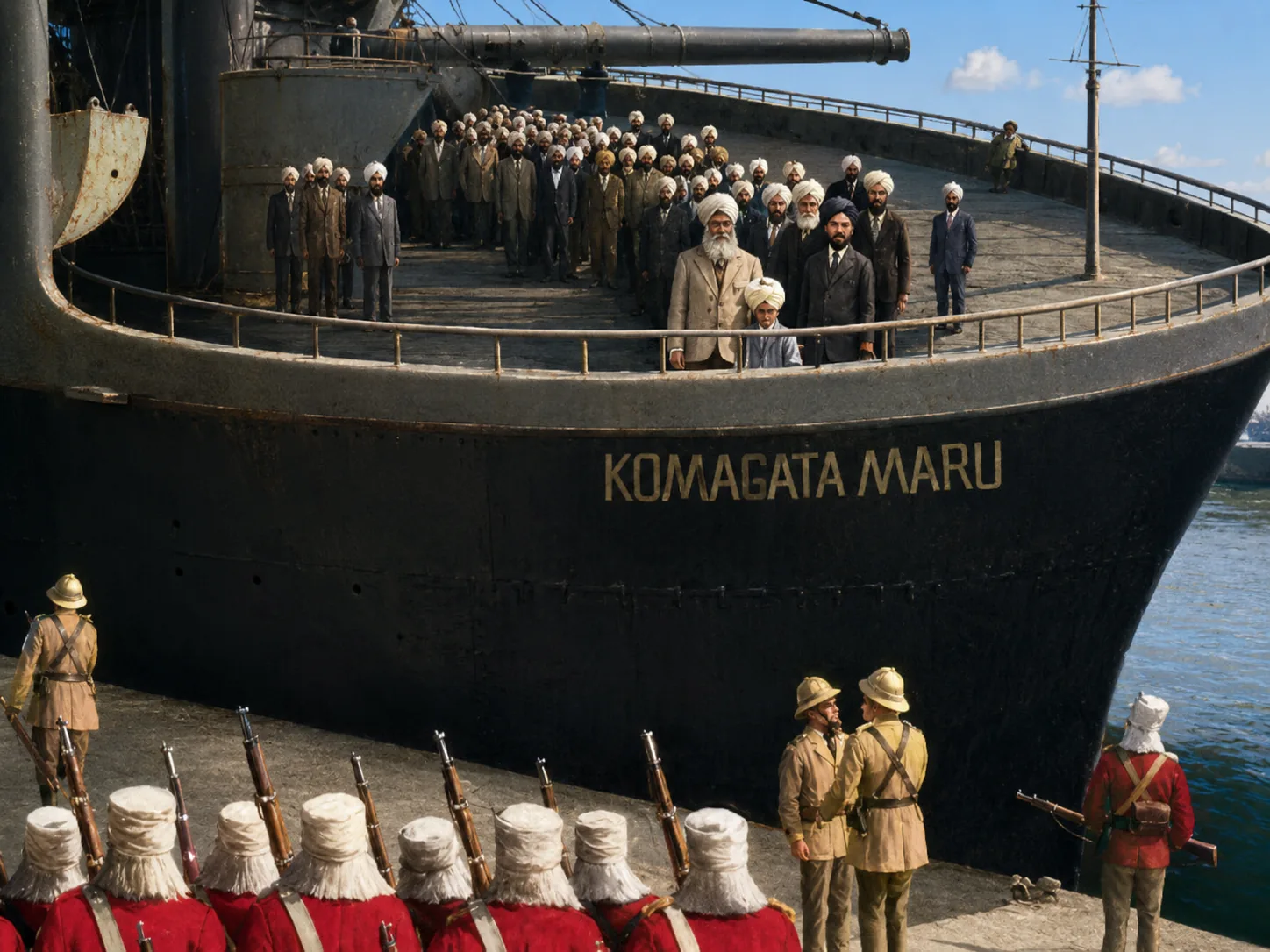
By the time the ship reached Asia again, the First World War had begun, and British officials, fearing the passengers had been radicalised, barred it from Hong Kong and Singapore. The Komagata Maru was directed back to India, arriving near Calcutta at the end of September 1914 and anchoring at Budge Budge.
The authorities tried to put the passengers straight onto a train bound for Punjab. They refused, and set off on foot towards Calcutta. Police intercepted them, a confrontation broke out, and the troops opened fire. Twenty passengers were killed. Many more were wounded or arrested, and a number were imprisoned or placed under village confinement for the rest of the war. Gurdit Singh escaped, lived in hiding for years, and later surrendered on the urging of Mahatma Gandhi, serving a five-year sentence.
Aftermath and apology
The Komagata Maru hardened a generation. For Punjabis at home and abroad, it became proof that loyalty to the Empire bought them no equality within it, and it fed the same current of anti-colonial feeling that would erupt at Jallianwala Bagh five years later, again in Punjab, again on Vaisakhi.
Recognition came slowly. India opened a memorial at Budge Budge in 1952. Canada placed commemorative plaques over the following decades, and on 18 May 2016 Prime Minister Justin Trudeau delivered a formal apology in the House of Commons for the way the passengers had been treated. In 2024, part of Canada Place in Vancouver, the very waterfront where the ship was held, was co-named Komagata Maru Place.
Why it still matters
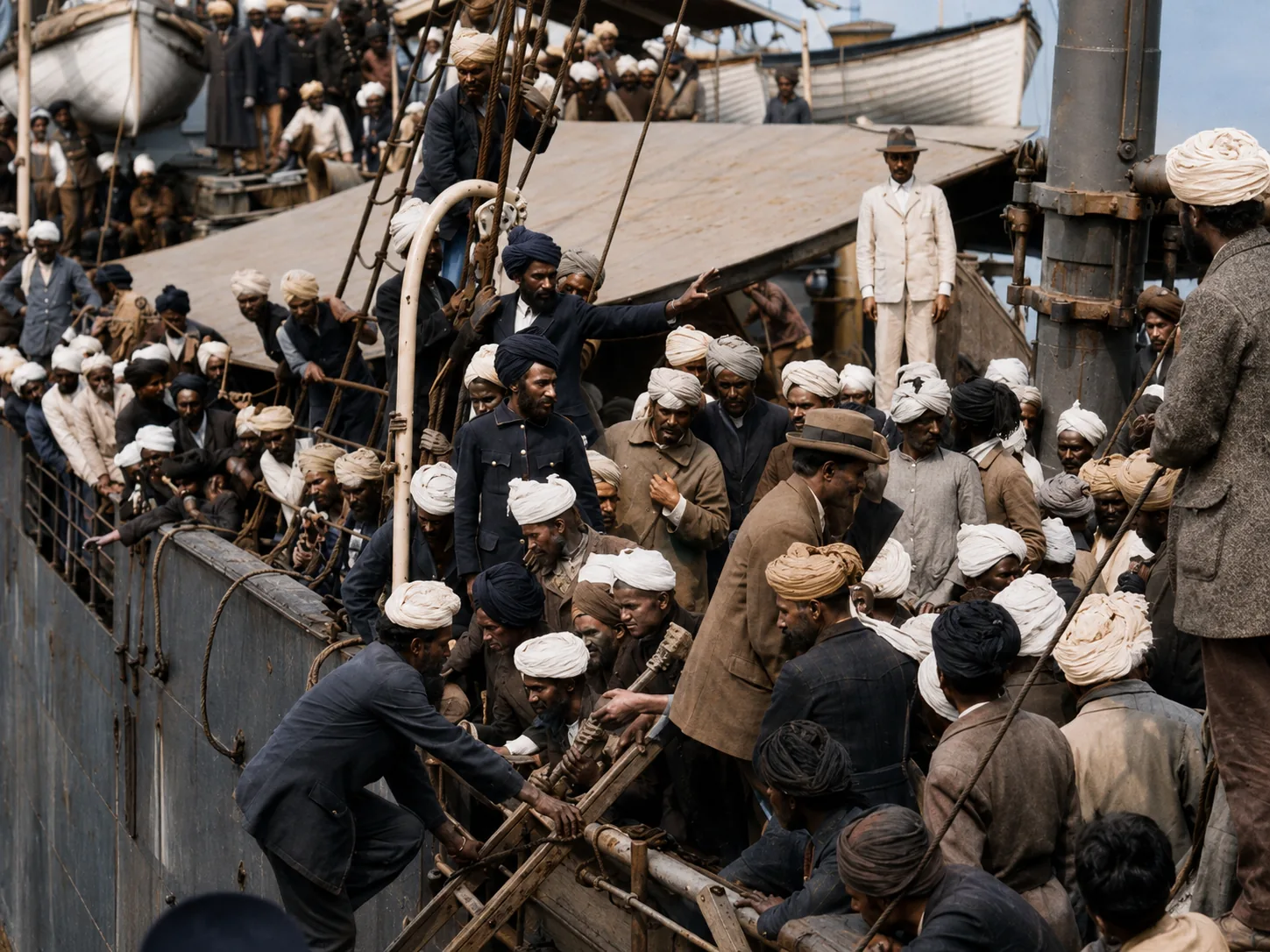
For today's diaspora, the Komagata Maru is more than a date in a textbook. It is the story of ordinary Punjabis who refused to accept that some subjects were worth less than others, and who paid dearly for asking. Every Punjabi community that now thrives in Canada stands, in part, on what those 376 passengers were denied. Remembering them is a way of understanding how the journey began, and how far it has come.