Guru Nanak Dev Ji
Early Life
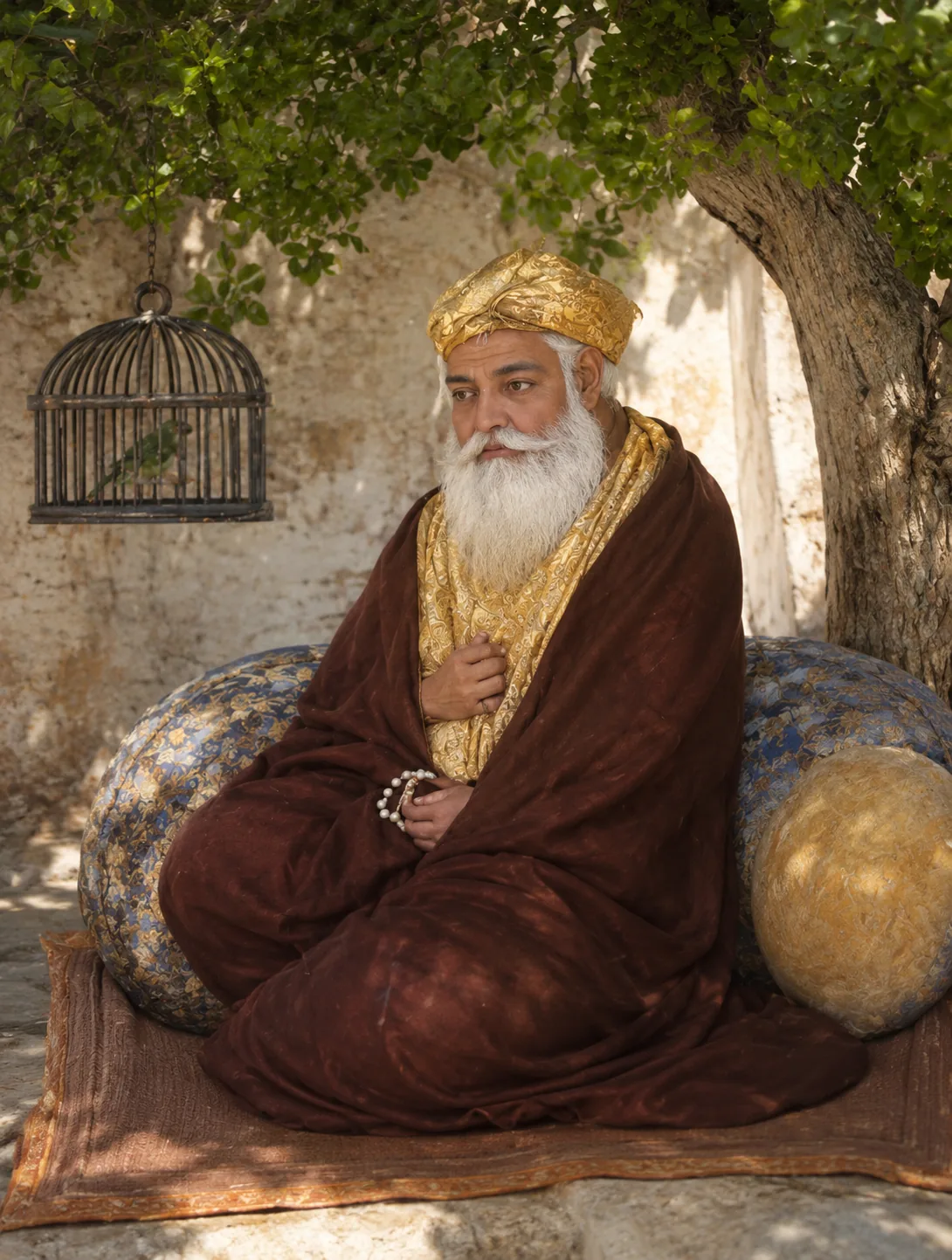
Guru Nanak was born in 1469 in the village of Rai Bhoi di Talwandi (now Nankana Sahib, Pakistan) to a Hindu Khatri family. From an early age, he questioned the rituals and social hierarchies around him. When given the sacred thread (janeu) in a Hindu ceremony, the young Nanak refused it, asking: "Let mercy be the cotton, contentment the thread, continence the knot, and truth the twist." He was not interested in symbols - he wanted substance.
He married Mata Sulakhni and had two sons - Sri Chand and Lakhmi Das - but the call to a spiritual mission was irresistible. He worked as an accountant at a grain store in Sultanpur Lodhi, where his generosity to the poor was already evident.
The Revelation
One morning, while bathing in the river Bein, Guru Nanak disappeared for three days. When he returned, his first words were: "There is no Hindu, there is no Muslim" - a statement that shook the religious establishment of his time. He had received a divine revelation and a mission: to teach the oneness of God, the equality of all people, and the path of honest living, sharing, and remembrance of the divine name.
The Four Udasis (Great Journeys)
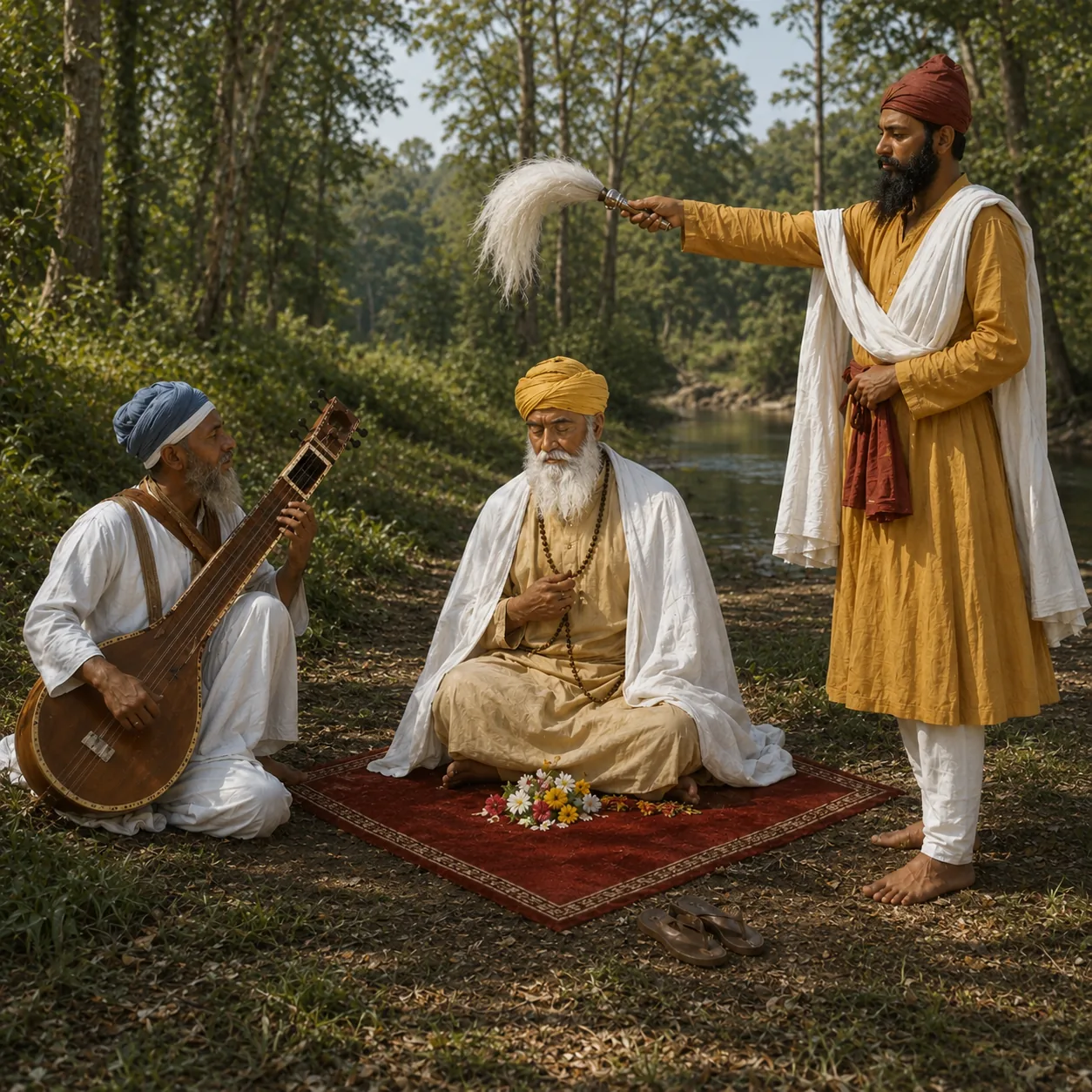
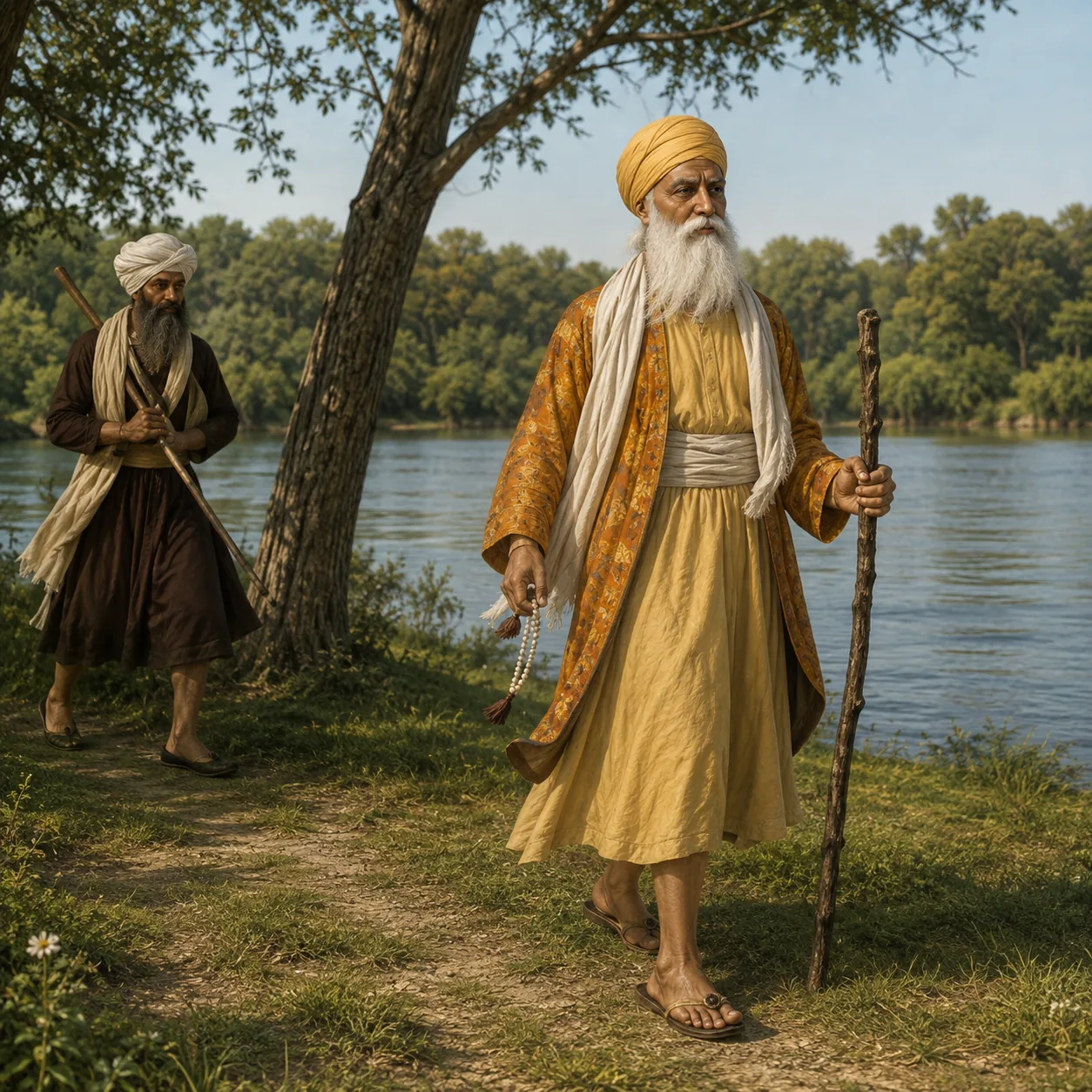
Guru Nanak spent approximately 24 years travelling on four great journeys (Udasis), covering over 28,000 kilometres on foot:
- First Udasi (East): Through present-day India - Varanasi, Gaya, Bengal, Assam, and Jagannath Puri. He debated with Hindu priests, challenged caste discrimination, and taught wherever he went.
- Second Udasi (South): Through Sri Lanka, Tamil Nadu, and the Deccan. He engaged with Siddh yogis and Buddhist monks.
- Third Udasi (North): Through the Himalayas, Kashmir, Tibet, and Ladakh. He met with Sufi saints and yogic practitioners in mountain monasteries.
- Fourth Udasi (West): Through Multan, Baghdad, Mecca, and Medina. He is one of the few non-Muslim figures to have visited Islam's holiest cities. In Mecca, when told he was sleeping with his feet pointing towards the Kaaba, he replied: "Turn my feet in a direction where God is not."
ਇੱਕ ਓਅੰਕਾਰ (Ik Onkar) - There is one God
ਨਾਮ ਜਪਣਾ (Naam Japna) - Meditate on God's name
ਕਿਰਤ ਕਰੋ (Kirat Karo) - Earn an honest living
ਵੰਡ ਛਕੋ (Vand Chakko) - Share with others
ਸਰਬੱਤ ਦਾ ਭਲਾ (Sarbat da Bhala) - Welfare of all
Kartarpur: The First Community
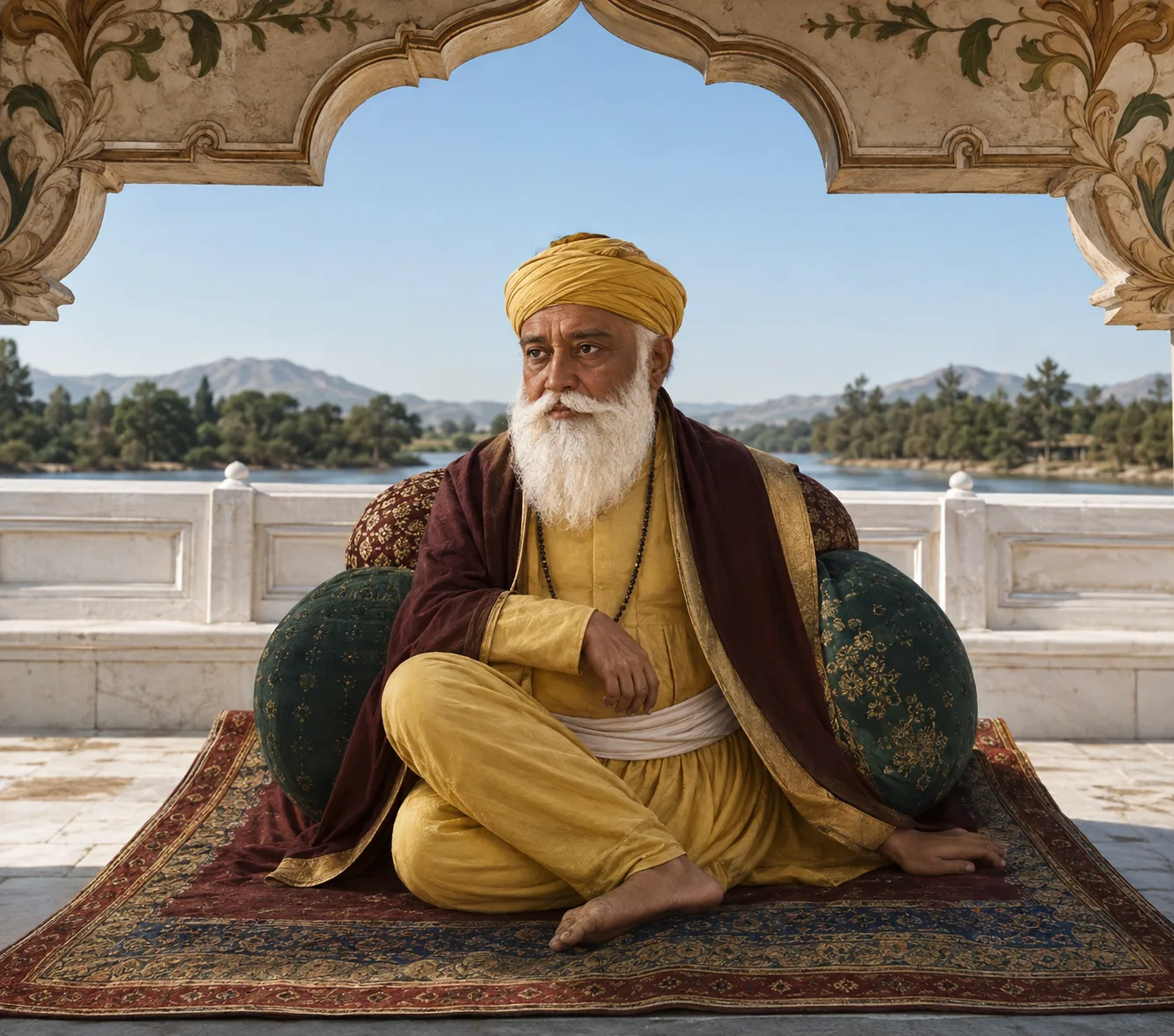
After his journeys, Guru Nanak settled in Kartarpur (now in Pakistan, near the India-Pakistan border) and established the first Sikh community. Here he put his teachings into daily practice: the sangat (congregation) where all sat as equals, and the langar (community kitchen) where everyone ate together regardless of caste or faith. He farmed the land himself - demonstrating that spiritual life and honest labour were not separate.
In 2019, the Kartarpur Corridor was opened, allowing Indian Sikh pilgrims to visit the gurdwara at Kartarpur without a Pakistani visa - one of the rare moments of cooperation between the two nations on a Punjabi issue.
Legacy
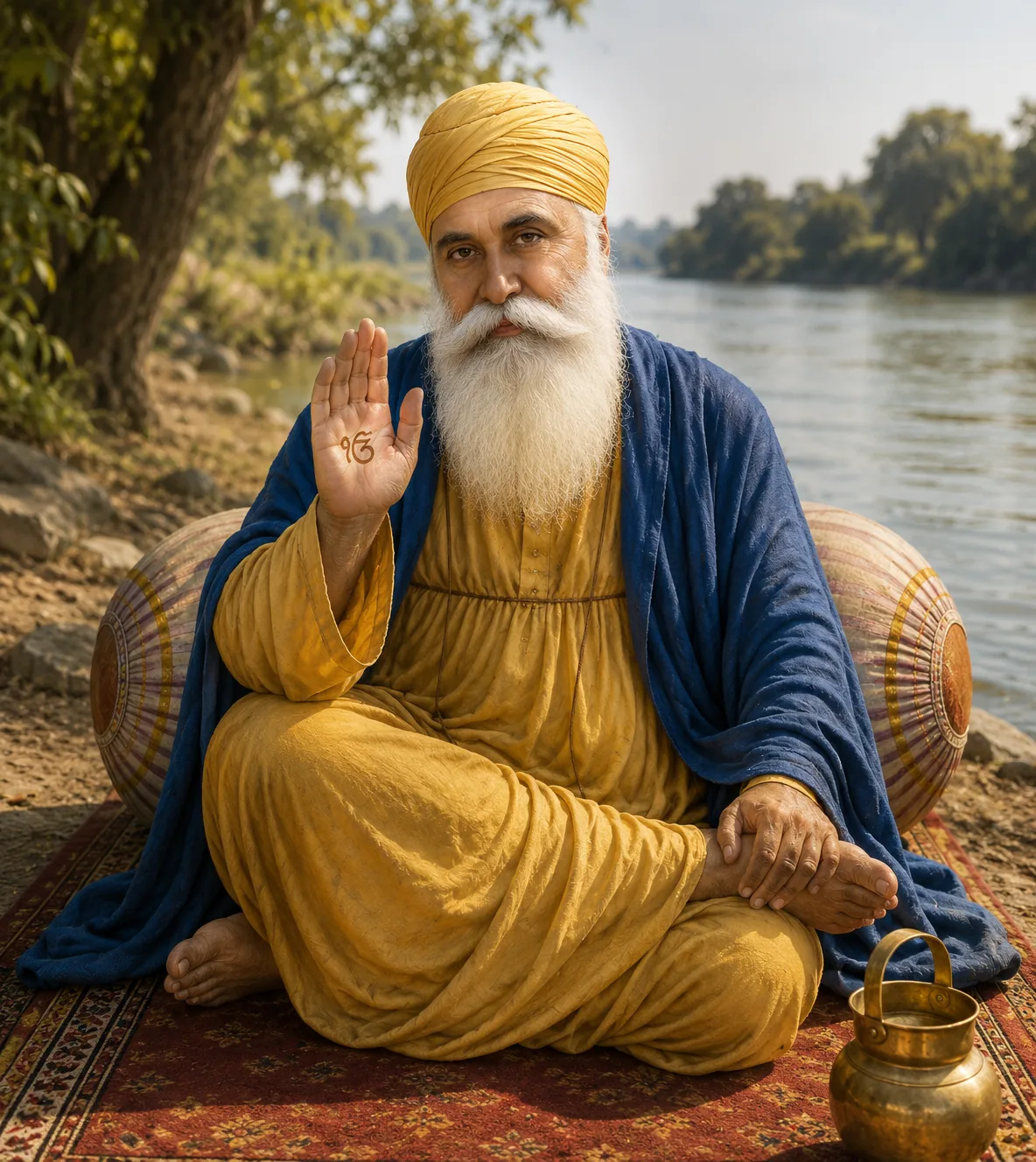
Guru Nanak's compositions form the opening section of the Guru Granth Sahib, beginning with the Japji Sahib - the foundational prayer of Sikhism, recited by millions every morning. His poetry is remarkable for its directness, its rejection of priestly authority, and its insistence on the equality of all human beings - ideas that were centuries ahead of their time.