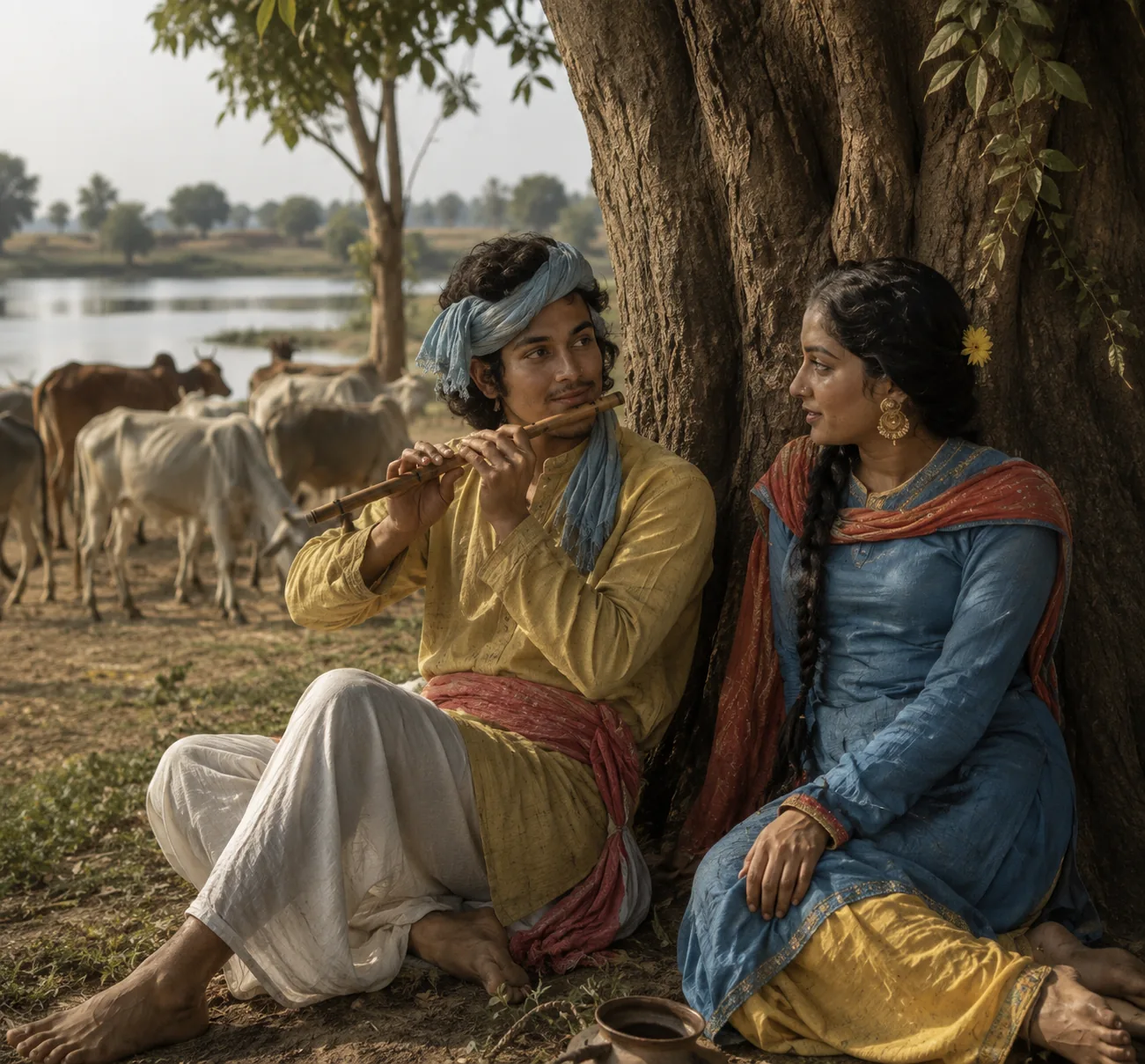
Few stories live in Punjabi hearts the way Heer Ranjha (ਹੀਰ ਰਾਂਝਾ) does. It is a tale of love so strong that it defies family, clan, and custom, and ends in sorrow that listeners have wept over for generations. Heer, a beautiful young woman of the Sial clan of Jhang, and Ranjha, a flute-playing wanderer of the Ranjha clan, are not just two lovers. They have become a way for Punjabis to speak about longing, devotion, and the price of standing against the world. The story is older than any single book, yet it found its most celebrated voice in the verse of the Sufi poet Waris Shah, written in 1766.
The Tale of Two Lovers
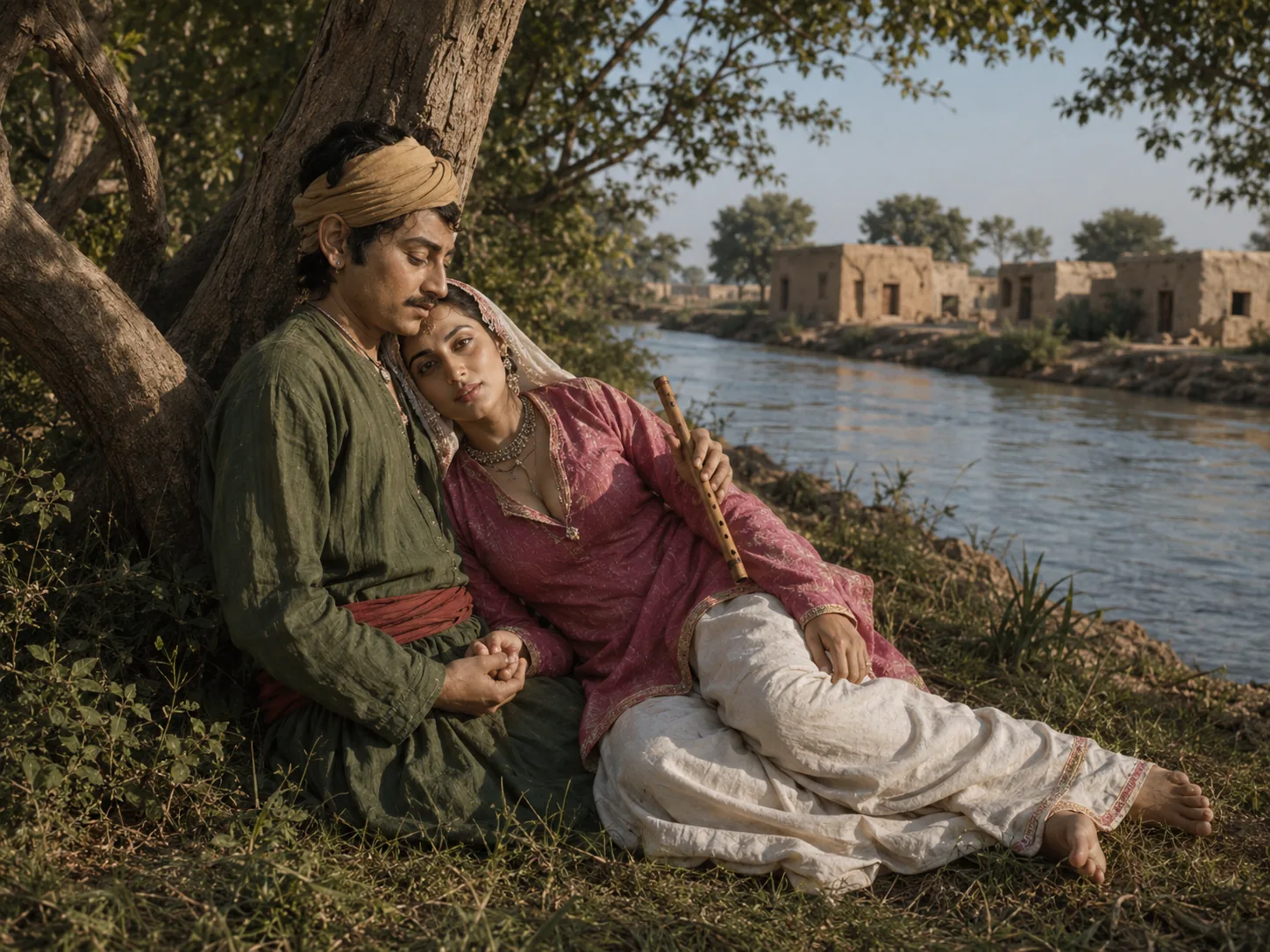
Dhido Ranjha is the youngest and most pampered of several brothers in the village of Takht Hazara. While his brothers work the land, he passes his days playing the wanjli (ਵੰਜਲੀ), the flute. After his father's death, a quarrel over the family fields, and cold treatment from his brothers' wives, drives him to leave home for good. Wandering far, he reaches the lands of the wealthy Sial clan near Jhang and is given work as a herdsman, tending the family's water buffalo.
It is there that he meets Heer (ਹੀਰ), the lovely daughter of the household. As Ranjha plays his flute among the grazing cattle, Heer falls deeply in love. For years the two meet in secret, their bond growing stronger even as the danger of discovery grows around them.
Kaido and the Forced Marriage
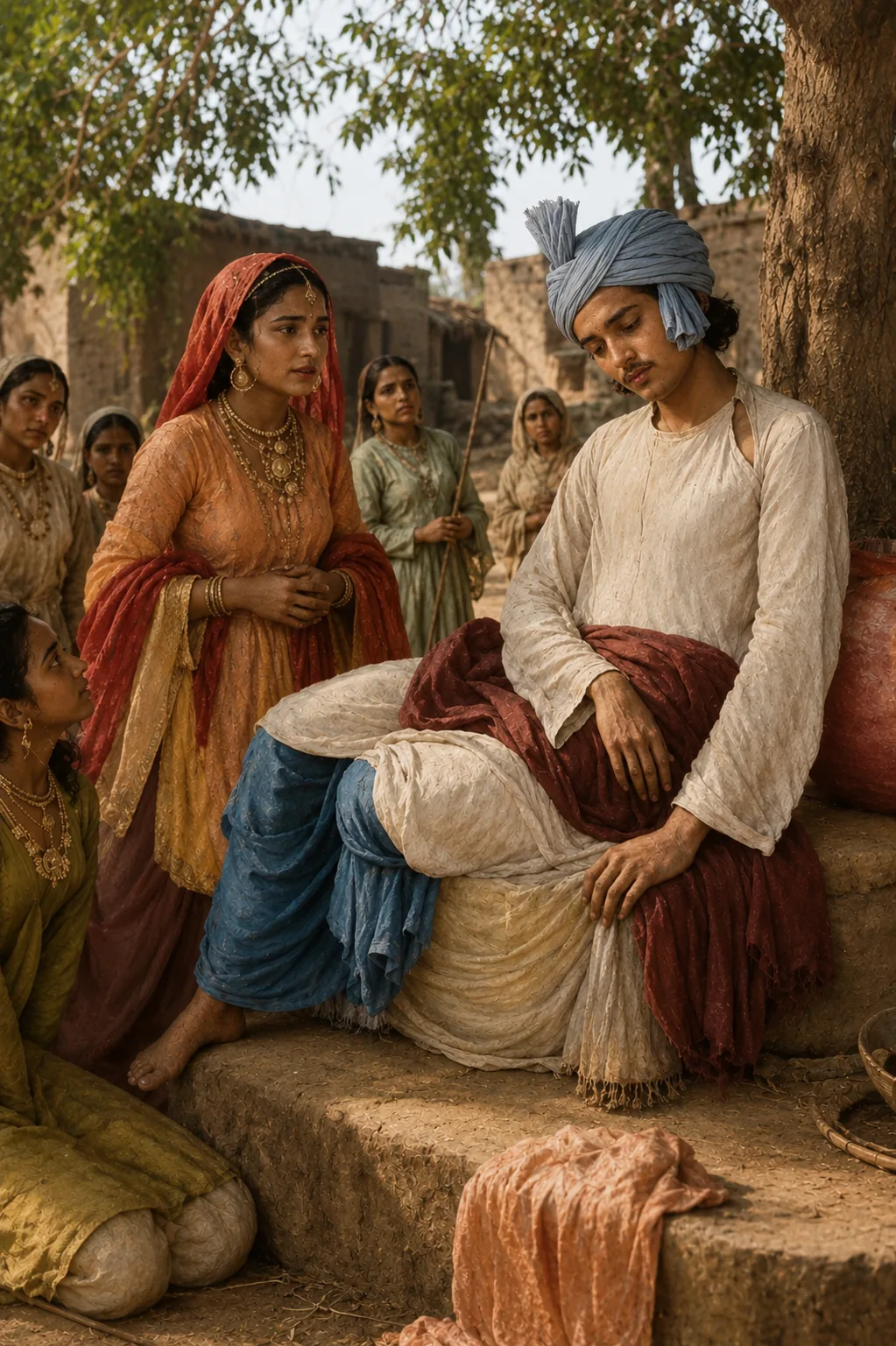
Their happiness cannot last. Heer's jealous and crippled uncle, Kaido (ਕੈਦੋ), suspects the lovers and works to expose them. Once the secret is out, Heer's parents are furious that their daughter has given her heart to a hired herdsman. To protect the family's honour, they arrange her marriage to Saida Khera, a man of another clan. Heer is married against her will and taken away, leaving Ranjha shattered.
This is the wound at the centre of the epic: a love that is true but forbidden, crushed by family pride and the rules of clan and marriage. The fault lines that the story exposes still echo in Punjabi life today, far from the world of the old Punjabi Wedding.
The Jogi's Path
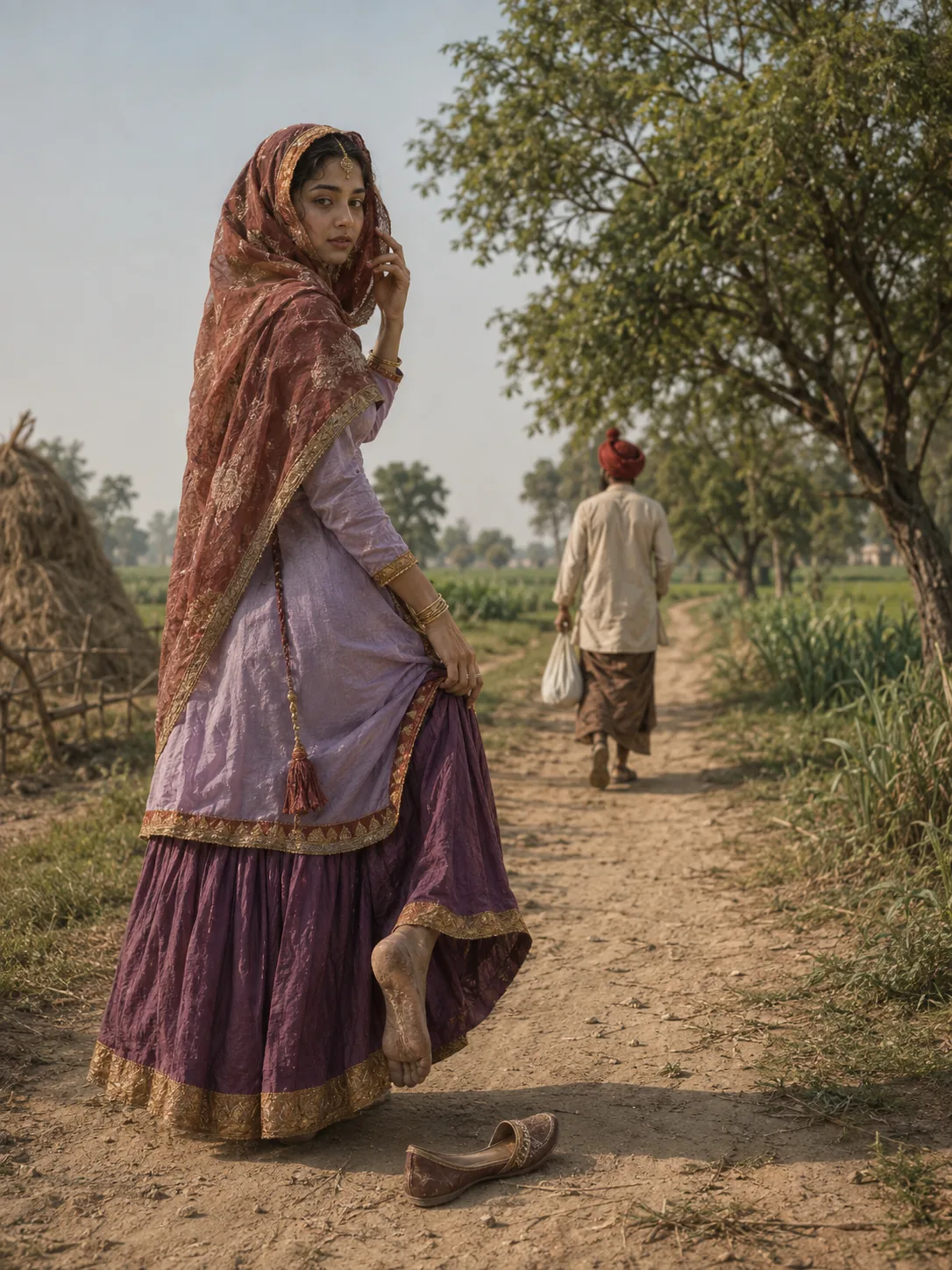
Broken by loss, Ranjha leaves the settled world behind. He travels to a community of jogis (ਜੋਗੀ), wandering ascetics, and takes on their robes, ash, and earrings. His transformation is more than a disguise. It carries the Sufi idea that earthly love can open a path toward the divine, and that a lover stripped of everything becomes a seeker.
In his jogi disguise, Ranjha makes his way to the village where Heer now lives. The two find each other again, and after much struggle the families seem ready, at last, to let them be together.
A Tragic End
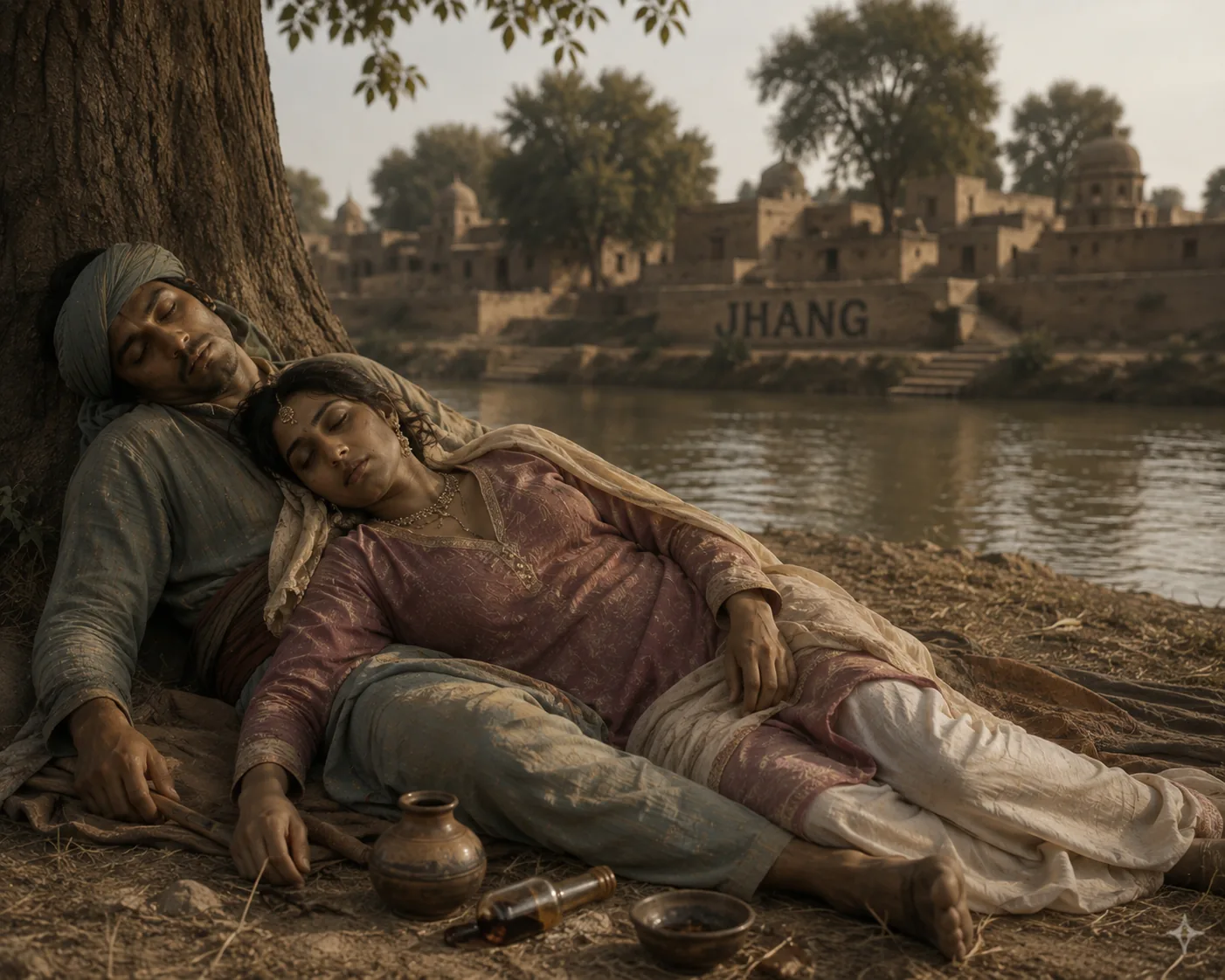
The promise of reunion is undone by the same bitterness that began their troubles. In the best-known telling, Kaido and Heer's relatives cannot bear the match and poison her. Ranjha arrives to find his beloved dead. Unwilling to live without her, he too takes the poison and dies at her side. In death the lovers are joined as they never could be in life, and the town of Jhang is remembered as the place where their story rests.
True lovers, it is said, are never truly parted, for the world that kept them apart could not follow them beyond it.
Waris Shah and the Other Poets
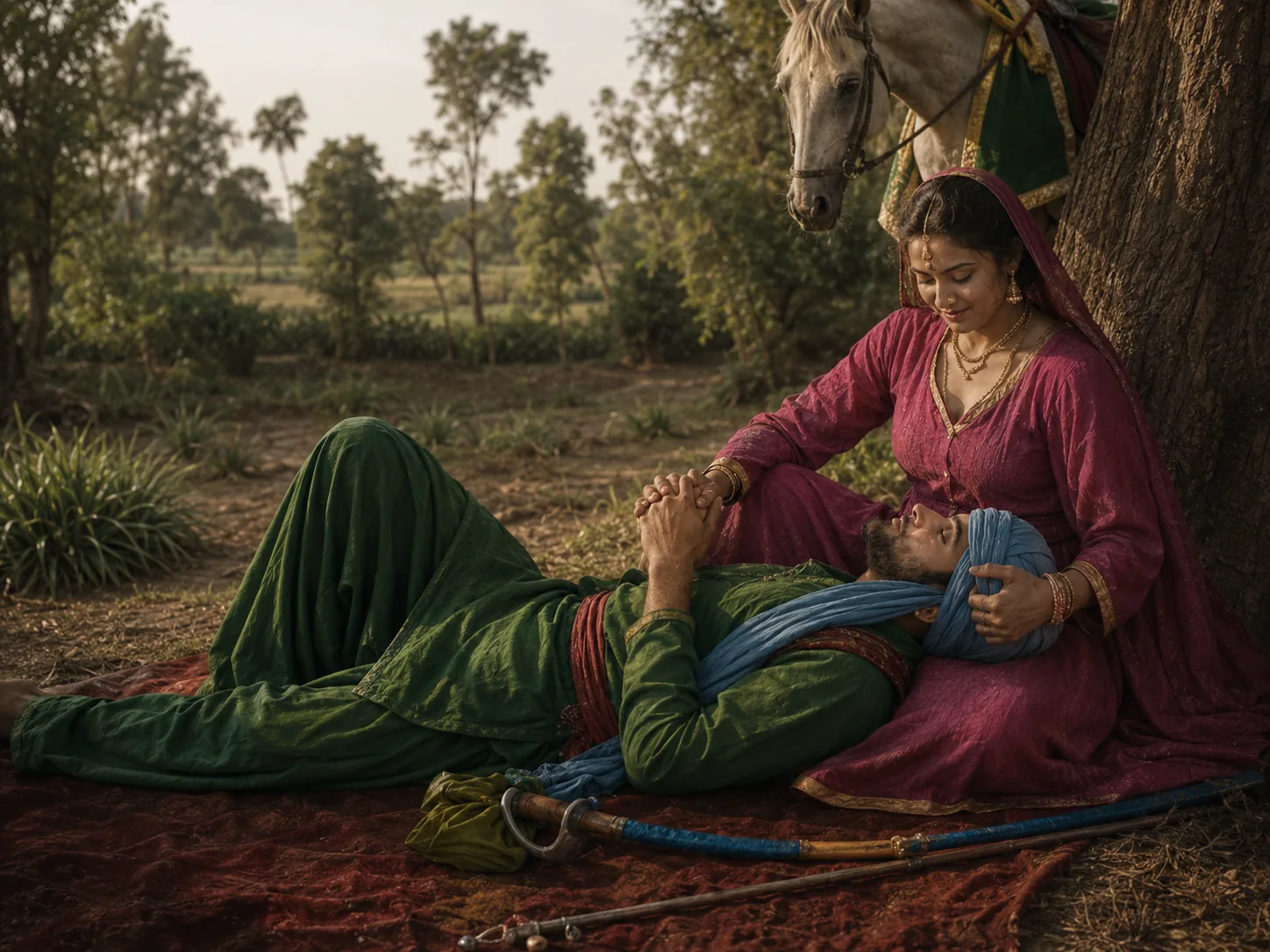
Heer Ranjha was sung and told long before anyone wrote it down. An early surviving version was composed by Damodar Das Gulati in the early seventeenth century, and the lovers are mentioned in the devotional poetry of Shah Hussain (1538 to 1599) and other writers of that age.
It was Waris Shah, a poet of the Chishti Sufi order, who gave the epic its most beloved form. His Heer, completed in 1766, retells the romance in flowing Punjabi verse while turning it into an allegory of the soul's yearning for God. So great is its standing that Punjabis often call the poem simply Heer Waris Shah. Traditionally it is recited in bhairavi raag, a melody still heard wherever the poem is sung. Because Waris Shah wrote in the Shahmukhi script of western Punjab, readers in eastern Punjab often meet his words in Gurmukhi, a contrast explored in Gurmukhi vs Shahmukhi.
One of Punjab's Great Qisse
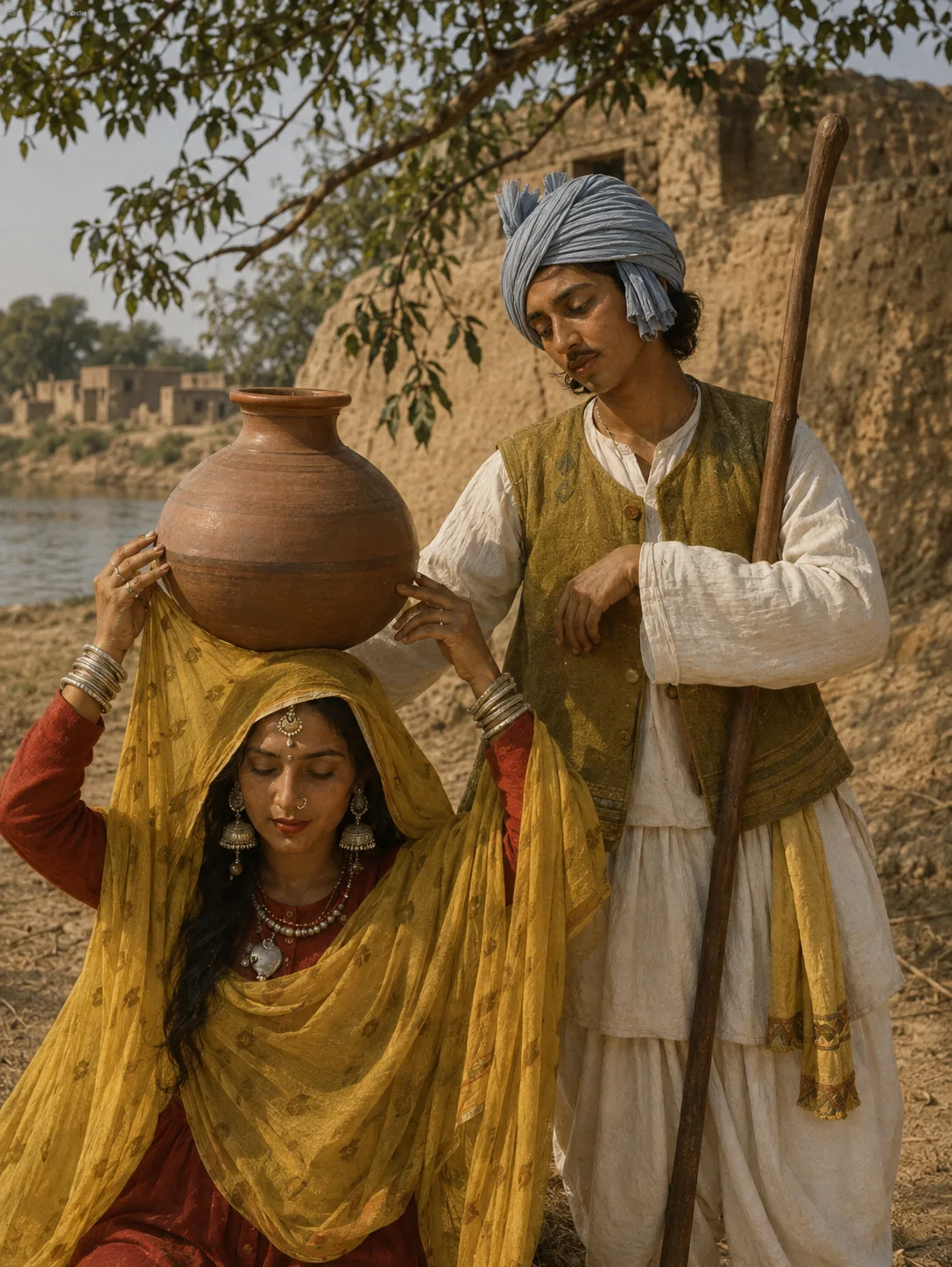
Heer Ranjha stands among the great qisse (ਕਿੱਸੇ), the long story-poems that are a treasure of Punjabi literature. It is counted with Mirza Sahiban, Sohni Mahiwal, and Sassi Punnun as one of the four famous tragic romances of Punjab. What sets these tales apart is their theme: ordinary lovers who defy social rule and pay for it, voicing a quiet protest against a world that values honour above the heart.
The poem has never left the living culture of Punjab. Its verses are chanted by folk singers, woven into the kafis of the Sufi Music and Qawwali tradition, and carried in memory by Punjabis far from home. From village gatherings to concert stages and diaspora festivals abroad, the lament of Heer is still sung, proof that a story of love and defiance never grows old.